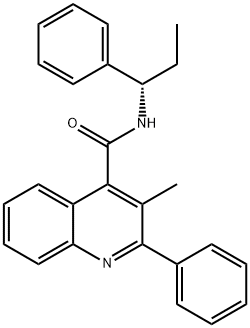
Uses
3-Methyl-2-phenyl-N-[(1S)-1-phenylpropyl]-4-quinolinecarboxamide is a chemical agent used in the preparation of acylpiperazinyl-pyrazoles as antagonists to the NK3 receptor as antipsychotics (1,2).
Definition
ChEBI: 3-methyl-2-phenyl-N-[(1S)-1-phenylpropyl]-4-quinolinecarboxamide is a member of quinolines.
Biological Activity
Potent and selective non-peptide NK 3 receptor antagonist. K i values are 4.4, >100,000 and 250 nM for human NK 3 , NK 1 and NK 2 receptors respectively. Brain penetrant and active in vivo .
in vivo
SB-222200 (5 mg/kg; 30 min pretreatment) produces inhibition of behavioral responses induced by NK-3 receptor-selective agonist senktide (HY-P0187) in mice[1].
SB-2222006 exhibits moderate oral bioavailability (rat 46%) and Cmax (rat 427 ng/mL) following oral administration (rat 10 mg/kg)[1].
SB-2222006 exhibits terminal elimination half-life (rat 1.9 h) due to high plasma clearance (56 mL/min/kg) following intravenous administration (rat 2.5 mg/kg)[1].
| Animal Model: | Male BALB/c mice (19-21 g)[1] |
| Dosage: | 5 mg/kg |
| Administration: | Oral administration |
| Result: | Produced 57% inhibition of senktide-induced behavioral responses in mice. |
| Animal Model: | Male Sprague-Dawley rats (300-400 g)[1] |
| Dosage: | 2.5 mg/kg for i.v.; 10 mg/kg for p.o. (Pharmacokinetic Analysis) |
| Administration: | Intravenous injection and oral gavage |
| Result: | Oral bioavailability (46%), T1/2 (1.9 h), Cmax (427 ng/mL). |