Synthesis
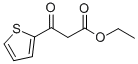
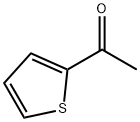
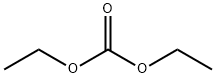
General procedure for the synthesis of ethyl 3-oxo-3-thiophene-2-yl-propionate from 2-acetylthiophene and diethyl carbonate: Sodium hydride (dispersion in 60% mineral oil, 100 g, 2.5 mol) was washed with anhydrous hexane (2 × 250 mL) under nitrogen protection at room temperature. Subsequently, anhydrous tetrahydrofuran (THF, 340 mL) was added with stirring, followed by the dropwise addition of an anhydrous THF (340 mL) solution of 2-acetylthiophene (136 mL, 1.25 mol) over 20 min. The reaction mixture was slowly warmed to 35 °C and maintained for 30 min. After that, a solution of diethyl carbonate (305.5 mL, 2.5 mol) in anhydrous THF (660 mL) was slowly added over 1 hour. After the reaction was continued for 1 hour, the mixture was cooled to 0-10 °C, the reaction was quenched with water (475 mL) and glacial acetic acid (145 mL) was added. After stirring for 20 minutes, the mixture was returned to room temperature. The organic layer was separated and the aqueous layer was extracted with ethyl acetate (3 x 200 mL). The organic phases were combined, washed with brine (2 x 200 mL), dried over anhydrous sodium sulfate and concentrated under reduced pressure. Ethyl 3-oxo-3-thiophen-2-yl-propionate was obtained as a crude dark orange oil in 98% yield (242.8 g).
References
[1] Patent: WO2004/24708, 2004, A2. Location in patent: Page 18-19
[2] Patent: WO2009/158380, 2009, A1. Location in patent: Page/Page column 57
[3] Journal of Medicinal Chemistry, 2005, vol. 48, # 9, p. 3417 - 3427
[4] Journal of Medicinal Chemistry, 2006, vol. 49, # 6, p. 1910 - 1915
[5] Bioorganic Chemistry, 2016, vol. 65, p. 82 - 89