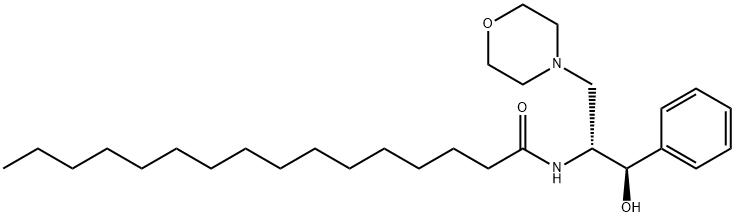
Description
D-threo-PPMP also known as 1R,2R-(+)-1-phenyl-2-palmitoylamino-3-N-morpholine-1-propanol, is a bioactive sphingolipid. It plays a vital role in regulation of ceramide metabolism. D-threo-PPMP influences cytokinesis failure and glycosylation by inhibiting glucosyl ceramide synthase (GCS). D-threo-PPMP also stops acylation reaction by inhibiting the activity of 1-O-acylceramide synthase (1-O-ACS).
Uses
D-threo-PPMP is a potent inhibitor of glucosylceramide (GlcCer) synthase. D-threo-PPMP can block karyokinesis and reduce cyst production[1][2].
in vitro
On the other hand, D-threo-1-phenyl-2-palmitoylamino-3-morpholino-1-propanol (PPMP), an inhibitor of glucosylceramide synthesis, blocked karyokinesis and reduced cyst production in culture. PPMP also altered the expression of cyst wall protein transcripts in encysting cells._x000D_
_x000D_
Reference: Infect Immun. 2008 Jul;76(7):2939-49. https://pubmed.ncbi.nlm.nih.gov/18426892/
target
D-threo-PPMP is a potent inhibitor of glucosylceramide (GlcCer) synthase.
References
[1] Gouazé V, et, al. Glucosylceramide synthase blockade down-regulates P-glycoprotein and resensitizes multidrug-resistant breast cancer cells to anticancer drugs. Cancer Res. 2005 May 1;65(9):3861-7. DOI:
10.1158/0008-5472.CAN-04-2329[2] Hernandez Y. Novel role of sphingolipid synthesis genes in regulating giardial encystation. Infect Immun. 2008 Jul;76(7):2939-49. DOI:
10.1128/IAI.00116-08[3] Wu X, et, al. Liquid chromatography method for quantifying D-threo-1-phenyl-2-palmitoylamino-3-morpholino-1-propanol (D-threo-PPMP) in mouse plasma and liver. J Chromatogr B Analyt Technol Biomed Life Sci. 2006 Jun 6;837(1-2):44-8. DOI:
10.1016/j.jchromb.2006.03.060