Synthesis
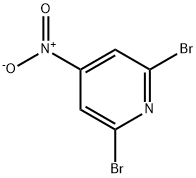
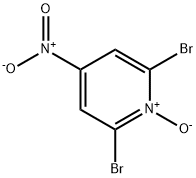
General procedure for the synthesis of 2,6-dibromo-4-nitropyridine N-oxide from 2,6-dibromo-4-nitropyridine N-oxide: to a suspension of 22.7 g (76.2 mmol) of 2,6-dibromo-4-nitropyridine N-oxide in chloroform (120 mL) was added slowly and dropwise at 5 °C phosphorus trichloride (20 mL, 229 mmol). Subsequently, the reaction mixture was heated to 75 °C and refluxed for 4 days. Upon completion of the reaction, the mixture was carefully poured into 600 mL of ice water and neutralized with sodium bicarbonate solution. The organic and aqueous layers were separated and the aqueous layer was extracted with chloroform (3 x 150 mL). The organic layers were combined and dried with magnesium sulfate and subsequently concentrated under vacuum. The residue was purified by silica gel column chromatography (eluent: petroleum ether/ethyl acetate=4:1) to afford 15.5 g (72% yield) of 2,6-dibromo-4-nitropyridine as a white solid with a melting point of 122-123 °C. The residue was extracted with chloroform (3 x 150 mL) and the aqueous layer was extracted with chloroform.
References
[1] Journal of Medicinal Chemistry, 2003, vol. 46, # 7, p. 1273 - 1276
[2] Journal of Medicinal Chemistry, 2014, vol. 57, # 20, p. 8307 - 8318
[3] Tetrahedron Letters, 2007, vol. 48, # 1, p. 113 - 117
[4] Patent: WO2005/26164, 2005, A1. Location in patent: Page/Page column 41
[5] Helvetica Chimica Acta, 1997, vol. 80, # 1, p. 86 - 96