Synthesis
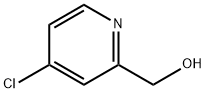
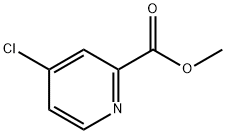
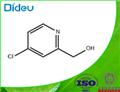
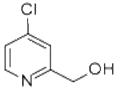
General procedure for the synthesis of 4-chloro-2-pyridinemethanol from methyl 4-chloropyridinecarboxylate: Methyl 4-chloropyridinecarboxylate (4.0 g, 23.3 mmol) and CaCl2 (10.3 g, 93.2 mmol) were dissolved in a solvent mixture of anhydrous MeOH-THF (2:1, 30 mL) and cooled to 0 °C. NaBH4 (1.8 g, 46.6 mmol) was added in batches under stirring. The reaction mixture was kept at 0 °C for the reaction. After completion of the reaction, water was added to quench the reaction. The solvent was removed by rotary evaporator and the residue was dissolved in water and extracted with CHCl3. The organic phases were combined, dried over MgSO4, filtered and concentrated by evaporation to give 4-chloro-2-pyridine methanol (3.3 g, 98% yield) as a white solid.
References
[1] Chemical Communications, 2009, # 20, p. 2848 - 2850
[2] Bulletin of the Chemical Society of Japan, 2015, vol. 88, # 6, p. 784 - 791
[3] Synthetic Communications, 2005, vol. 35, # 24, p. 3187 - 3190
[4] Inorganic Chemistry, 2013, vol. 52, # 11, p. 6481 - 6501
[5] Angewandte Chemie - International Edition, 2017, vol. 56, # 23, p. 6483 - 6487