Uses
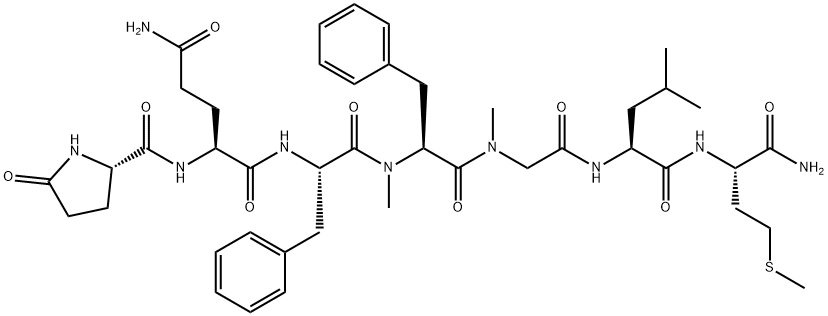
[Glp5,(Me)Phe8,Sar9] Substance P (5-11) (DiMe-C7) is a Substance P (HY-P0201) analogue that has approximately the same effects as Substance P (HY-P0201) on neurokinin 1 receptor (NK1R) in rat brain, but with a much longer duration of action. [Glp5,(Me)Phe8,Sar9] Substance P (5-11) selectively activates dopamine metabolism in the mesencephalon and midbrain cortex of the rat brain. [Glp5,(Me)Phe8,Sar9] Substance P (5-11) also increases motor activity and induces recovery of addictive agent-seeking behavior in rats[1][2][3].
in vivo
[Glp5,(Me)Phe8,Sar9] Substance P (5-11) (2 μg/side; inject into the ventral tegmental area; single) exhibits selective activation of mesolimbic and mesocortical dopamine metabolism in rat brain[1].
[Glp5,(Me)Phe8,Sar9] Substance P (5-11) (0.5, 1.5, 3 μg/side; inject into the ventral tegmental area; single) increases motor activity and induces recovery of addictive agent-seeking behavior in rats[2].
| Animal Model: | Male Sprague-Dawley rats (300-350 g)[1]. |
| Dosage: | 2 μg/side |
| Administration: | Inject into the ventral tegmental area; single |
| Result: | Selectively activated mesolimbic and mesocortical dopamine metabolism. |
| Animal Model: | Male Wistar rats (300-350 g)[2]. |
| Dosage: | 0.5, 1.5, 3 μg/side |
| Administration: | Inject into the ventral tegmental area; single |
| Result: | Significantly increased locomotor activity when at 3 μg/side. |
References
[1] Elliott PJ, et al. Selective activation of mesolimbic and mesocortical dopamine metabolism in rat brain by infusion of a stable substance P analogue into the ventral tegmental area. Brain Res. 1986 Jan 15;363(1):145-7. DOI:
10.1016/0006-8993(86)90667-0[2] Eison AS, et al. Substance P analog, DiMe-C7: evidence for stability in rat brain and prolonged central actions. Science. 1982 Jan 8;215(4529):188-90. DOI:
10.1126/science.6171884[3] Placenza FM, et al. Infusion of the substance P analogue, DiMe-C7, into the ventral tegmental area induces reinstatement of cocaine-seeking behaviour in rats. Psychopharmacology (Berl). 2004 Dec;177(1-2):111-20. DOI:
10.1007/s00213-004-1912-9