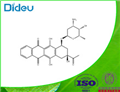
Chemical Properties
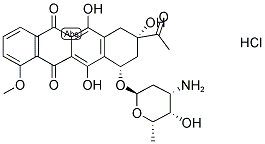
Idarubicin Hydrochloride: CHNOHCl. [57852-57-0]. Bright orange crystalline powder, melting point 183–185°C; melting point 172–174°C has also been reported. [α]
D20+205° (C=0.1, methanol); also reported as [α]
D20+188° (C=0.10, methanol).
Definition
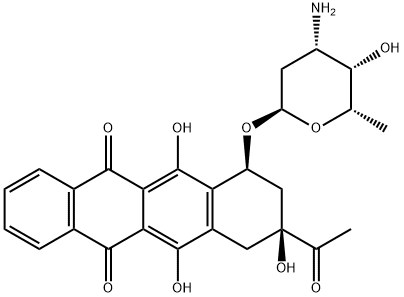
ChEBI: Idarubicin is a monosaccharide derivative, an anthracycline antibiotic and a deoxy hexoside. It derives from a hydride of a tetracene.
Indications
Idarubicin (Idamycin) differs from its parent compound,
daunorubicin, by the absence of the methoxy
group in the anthracycline ring structure. Its mechanisms
of action and resistance are similar to those of
doxorubicin and daunorubicin; however, it is more
lipophilic and more potent than these other anthracyclines.
Idarubicin undergoes extensive hepatic metabolism
and biliary excretion. Adverse reactions of idarubicin
are similar to those of its congeners.
brand name
Zavedos ; Idamycin/Idamycin PFS
Mechanism of action
Idarubicin is an anthracycline antitumor drug. It mainly exerts its therapeutic effect on acute leukemia by binding to DNA and inhibiting the activity of topoisomerase II, thereby disrupting DNA replication and transcription and causing DNA damage and cell death.
Clinical Use
Idarubicin is a chemotherapy drug used to treat acute myeloid leukaemia (AML) and acute lymphoblastic leukaemia (ALL).