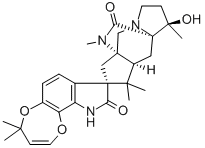
Description
Paraherquamide A is a mycotoxin anthelmintic originally isolated from
P. paraherquei. It binds to acetylcholine receptors (IC
50 = 0.5 nM for head homogenates of
M. domestica) and acts as an antagonist. Paraherquamide A is toxic to
C. elegans (LD
50 = 2.5 μg/ml) and effective against
T. colubriformis infection in gerbils when used at doses ranging from 0.39 to 200 mg/kg. It is toxic to mice (LD
50 = 14.9 mg/kg).
Uses
Paraherquamide A is a selective, competitive, cholinergic antagonist.
Uses
Paraherquamide A was first reported as a mycotoxin related to the indole tremorgenic mycotoxins. Subsequent research identified a potent, non-toxic paralysis of nematodes which led to the metabolite's development as a candidate anthelmintic. Paraherquamide A is a selective, competitive, cholinergic antagonist that distinguishes subtypes of cholinergic receptors.
References
[1] ALAN P ROBERTSON. Paraherquamide and 2-deoxy-paraherquamide distinguish cholinergic receptor subtypes in Ascaris muscle.[J]. Journal of Pharmacology and Experimental Therapeutics, 2002, 302 1: 853-860. DOI:
10.1124/jpet.102.034272[2] RALF NAUEN Klaus T Ulrich Ebbinghaus. Ligands of the nicotinic acetylcholine receptor as insecticides[J]. Pest Management Science, 1999, 55 5: 608-610. DOI:
10.1002/(sici)1096-9063(199905)55:5<608::aid-ps967>3.0.co;2-y[3] J G ONDEYKA. Novel antinematodal and antiparasitic agents from Penicillium charlesii. I. Fermentation, isolation and biological activity.[J]. Journal of Antibiotics, 1990, 43 11: 1375-1379. DOI:
10.7164/antibiotics.43.1375[4] D.A. OSTLIND. Efficacy of paraherquamide against immature Trichostrongylus colubriformis in the gerbil (Meriones unguiculatus)[J]. Research in veterinary science, 1990, 48 2: Pages 260-261. DOI:
10.1016/s0034-5288(18)31003-8[5] W L SHOOP. Acute toxicity of paraherquamide and its potential as an anthelmintic.[J]. American journal of veterinary research, 1992, 53 11: 2032-2034.