Chemical Properties
Light green solid
Uses
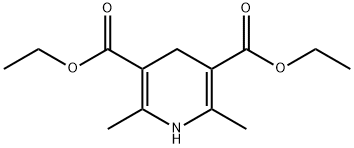
Diethyl 1,4-dihydro-2,6-dimethyl-3,5-pyridinedicarboxylate is a hydrogen source in conjugate reduction and organocatalytic reductive amination. It is used as a hydrogen source in organocatalytic reductive amination and conjugate reduction.
Uses
3,5-Dicarboethoxy-2,6-dimethyl-1,4-dihydropyridine is a dihydropyridine derivative that have been tested for antimicrobial activities.
Application
Diethyl 1,4-dihydro-2,6-dimethyl-3,5-pyridinedicarboxylate (DTP) was used to study the mechanism of electrochemical oxidation of DTP in ethanol/water solutions on a glassy carbon electrode.
Hazard
H315 (100%): Causes skin irritation [Warning Skin corrosion/irritation]
H319 (100%): Causes serious eye irritation [Warning Serious eye damage/eye irritation]
H335 (100%): May cause respiratory irritation [Warning Specific target organ toxicity, single exposure; Respiratory tract irritation]
Toxicology
rat LD50 intraperitoneal >16 gm/kg
mouse LD50 oral >32 gm/kg
mouse LD50 intraperitoneal >30 gm/kg
dog LD50 oral >12 gm/kg
Synthesis
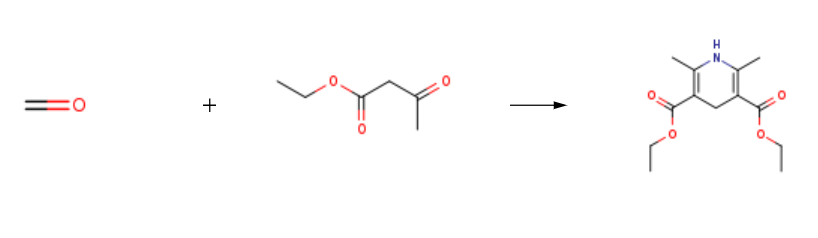
Diethyl 1,4-dihydro-2,6-dimethyl-3,5-pyridinedicarboxylate is prepared by the reaction of formaldehyd and ethyl acetoacetate in the presence of an inert gas.
Synthesis
Hantzsch Dihydropyridine (Pyridine) Synthesis reaction allows the preparation of dihydropyridine derivatives by
condensation of an aldehyde with two equivalents of a β-ketoester in the
presence of ammonia. Diethyl 1,4-dihydro-2,6-dimethyl-3,5-pyridinedicarboxylate can be produced by using this method.

Purification Methods
recrystallization from EtOH or flash chromatography with petroleum/ethyl acetate (7:3)