Description
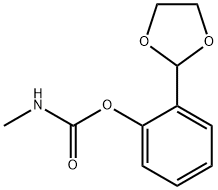
Dioxacarb is an obsolete carbamate insecticide. It is highly soluble in water and has a low volatility. It is not persistent in soils and, based on its physico-chemical properties, is not expected to leach to groundwater. Ecotoxicological data is scarce but dioxacarb is moderately toxic to birds and fish. It has a high mammalian oral toxicity and is an acetyl cholinesterase inhibitor.
Uses
Dioxacarb is used as pesticide.
Definition
ChEBI: Dioxacarb is a member of benzenes.
Production Methods
The commercial production of dioxacarb involves a multi-step process. It begins with the nitration of m-cresol using nitric acid in sulphuric acid to form 4-nitro-3-methylphenol, followed by reduction of the nitro group with iron or catalytic hydrogenation to yield 4-amino-3-methylphenol. This intermediate is then dimethylated with methyl iodide or dimethyl sulphate in the presence of a base to produce 4-(dimethylamino)-3-methylphenol. The final step entails carbamoylation via addition of the phenolic intermediate to methyl isocyanate in an organic solvent under controlled temperature to form the methylcarbamate ester.
Mechanism of action
Systemic. Acetylcholinesterase (AChE) inhibitor. Contact and stomach action with rapid knockdown.
Pesticide Type
Insecticide