Chemical Properties
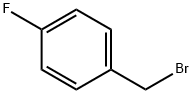
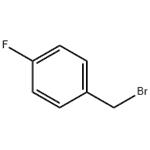
4-Fluorobenzyl bromide (C7H6BrF, CAS registry No. 459-46-1) is a colorless to light yellow liquid. Its flash point is 74.8 oC. It is stable at room temperature in closed containers under normal storage and handling conditions. 1,3-Difluorobenzene can react with water to form toxic fumes. Therefore, it should be stored in a tightly closed container and should be stored in a cool, dry and well-ventilated area away from incompatible substances.
Uses
4-Fluorobenzyl bromide is an important intermediate in organic chemistry. 4-Fluorobenzyl bromide can be used as alkylating reagent to participate in the alkylation reaction with sulfamic esters (R-O-SO2-NH2) in liquid-liquid phase transfer conditions, resulting in the preparation of the N-dialkyled products or the corresponding ethers by scission of the O-SO2 bond, depending on the nature of R.
4-Fluorobenzyl bromide can be used for the synthesis of glycyrrhetinic acid (GA) derivatives, which are slow-binding inhibitors of tyrosinase and have inhibitory effects on melanogenesis.
Chemical Properties
Colorless to light yellow liqui
Uses
4-Fluorobenzyl bromide was used in the preparation of:
- 3-acetyl-1-(4-fluorobenzyl)-4-hydroxy-1H-indole
- 1-(4-fluorobenzyl)-5-(pyrrolidine-1-sulfonyl)isatin
- (S)-1-(4-fluorobenzyl)-5-(2-(4-fluorophenoxymethyl)pyrrolidine-1-sulfonyl)isatin
- 8-bromo 9-(4-fluorobenzyl) adenine
- 8-bromo 3-(4-fluorobenzyl) adenine
Uses
4-Fluorobenzyl Bromide is a substituted benzyl bromide reagent used in the preparation of wide range of biologically active compounds such as bronchodialators, neurochemicals and antibacterials.
Synthesis
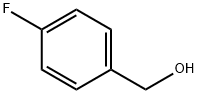
GENERAL METHOD: Benzyl alcohol (1 mmol) was dissolved in anhydrous benzene (15 mL), phosphorus tribromide (0.5 mL) was added and the reaction was stirred at room temperature. Upon completion of the reaction, the target product 4-fluorobenzyl bromide was obtained in quantitative yield by conventional post-processing steps.
References
[1] Journal of Steroid Biochemistry and Molecular Biology, 2013, vol. 137, p. 332 - 344
[2] Bulletin of the Chemical Society of Ethiopia, 2012, vol. 26, # 2, p. 305 - 309
[3] Tetrahedron Letters, 2016, vol. 57, # 22, p. 2430 - 2433
[4] Bioorganic and Medicinal Chemistry, 2009, vol. 17, # 8, p. 2989 - 3002
[5] Chem, 2018, vol. 4, # 1, p. 124 - 137