Uses
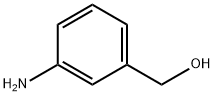
3-Aminobenzyl alcohol, is used as a reagent in the synthesis of quinone analogs as dynamin GTPase inhibitors. Also used as a reagent in the synthesis of pyrrolo[2,1-f][1,2,4]triazines as novel hedgehog signaling pathway inhibitors.
Synthesis
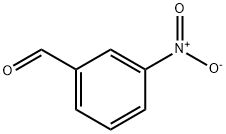
GENERAL PROCEDURE: In a 10 mL round bottom flask equipped with a magnetic stirrer, m-nitrobenzaldehyde (0.123 g, 1 mmol) and water (2 mL) were added to form a mixture. Subsequently, Ni2B (0.006 g, 0.05 mmol) was added to the mixture and stirred for 5 minutes. Next, NaBH4 (0.095 g, 2.5 mmol) was added and the resulting mixture continued to be stirred for 3 minutes at room temperature. The reaction process was monitored by thin layer chromatography (TLC) using hexane/ether (5:3) as eluent. After the reaction was completed, 2% aqueous KOH solution (5 mL) was added and stirring was continued for 10 min. After that, the mixture was extracted with ethyl acetate (3 x 8 mL), the organic phases were combined and dried with anhydrous Na2SO4. Finally, the solvent was evaporated to give pure 3-aminobenzyl alcohol liquid in 95% yield (0.088 g, Table 2, entry 1).
References
[1] Journal of the Iranian Chemical Society, 2015, vol. 12, # 7, p. 1221 - 1226
[2] Journal of Chemical Research, 2006, # 8, p. 542 - 544
[3] Dalton Transactions, 2016, vol. 45, # 36, p. 14230 - 14237
[4] Asian Journal of Chemistry, 2010, vol. 22, # 7, p. 5575 - 5580
[5] Journal of the Chemical Society of Pakistan, 2016, vol. 38, # 4, p. 679 - 684