Uses
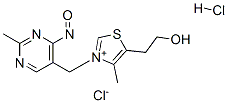
Oxythiamine chloride hydrochloride is suitable for use:
- as a reference standard for calibration curve generation in liquid chromatography-tandem mass spectrometry (LC-MS/MS) for oxythiamine pyrophosphate (OTPP) quantification in red blood cells
- as a thiamine transport inhibitor in human mammary epithelial cells (HMEC) and breast cancer cell lines
- in the synthesis of oxythiamineH picrolonate salt
Definition
ChEBI: A hydrochloride obtained by combining oxythiamine chloride with one molar equivalent of hydrochloric acid.
General Description
Oxythiamine is a thiamine antimetabolite and the source through diet is by consuming acidic thiamine rich foods.
Biochem/physiol Actions
Oxythiamine (OT) is a thiamine antagonist. It is a transketolase inhibitor and is employed to study anti-metastatic mechanisms, especially those involving metalloproteinases (MMP). It significantly sensitizes human hepatocellular carcinoma cells (HCC) to sorafenib, favoring tumor suppression.
in vivo
Oxythiamine chloride hydrochloride (100-500 mg/kg, i.p. 4 days) inhibits tumor growth in Ehrlich's ascites tumor hosting mice[2].
Oxythiamine chloride hydrochloride (250 or 500 mg/kg, daily for 5 week) inhibits tumor cell metastasis via inhibition of MMPs in mice implanted (s.c.) with LLC cells[4].
| Animal Model: | Ehrlich's ascites tumor hosting mice[2] |
| Dosage: | 100-500 mg/kg |
| Administration: | i.p., 4 days |
| Result: | Inhibited tumor growth by 43% at 300 mg/kg and 84% at 500 mg/kg. |