Synthesis
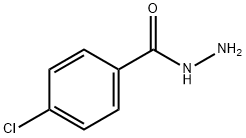
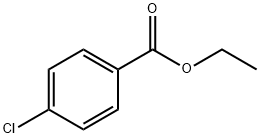
General procedure for the synthesis of 4-chlorobenzoyl hydrazine from ethyl p-chlorobenzoate: hydrazine was synthesized conventionally using the one-pot method (30-58% yield). 10 mmol of ethyl p-chlorobenzoate was dissolved in 20 mL of ethanol. 2 mL of 3N sulfuric acid was added to the solution and the reaction mixture was refluxed for 6 hours. The reaction process was monitored by thin layer chromatography (TLC). Upon completion of the reaction, the reaction mixture was neutralized with solid NaHCO3 and filtered to remove excess NaHCO3. To the neutralized reaction mixture, 1.5 mL (3 mmol) of hydrazine monohydrate was added and refluxing was continued for 3-6 h to ensure complete reaction. The ethanol and unreacted hydrazine were evaporated to 1/3 of the original volume by distillation.The reaction mixture was cooled to room temperature, the product was collected by filtration and recrystallized from methanol to give pure 4-chlorobenzhydrazide crystals (see Supporting Information for specific data).
References
[1] Medicinal Chemistry Research, 2013, vol. 22, # 6, p. 2755 - 2767
[2] Bioorganic and Medicinal Chemistry, 2015, vol. 23, # 17, p. 6014 - 6024
[3] Patent: CN106008390, 2016, A. Location in patent: Paragraph 0015
[4] Journal of Heterocyclic Chemistry, 1992, vol. 29, # 5, p. 1101 - 1109
[5] Oriental Journal of Chemistry, 2017, vol. 33, # 2, p. 971 - 978