Chemical Properties
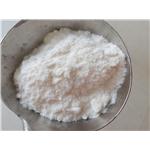
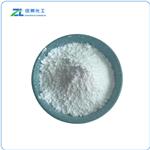
WHITE AMORPHOUS POWDER
Uses
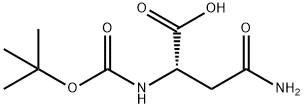
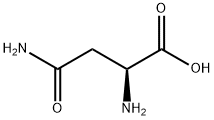
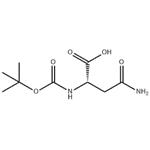
Nα-Boc-L-asparagine is an N-Boc-protected form of L-Asparagine (A790005). L-Asparagine was first isolated by Robiquet and Vauquelin from asparagus juice (a high source of L-asparagine). L-Asparagine is often incorporated into proteins, and is a basis for some cancer therapies as certain cancerous cells require L-asparagine for growth.
Definition
ChEBI: The Nalpha-t-butoxycarbonyl derivative of L-asparagine
reaction suitability
reaction type: Boc solid-phase peptide synthesis
Synthesis
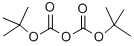
L-asparagine (15 g, 0.113 mol, 1.0 eq.) and sodium carbonate (12 g, 0.113 mol, 1.0 eq.) were dissolved in a solvent mixture of water (225 mL) and 1,4-dioxane (225 mL) at room temperature. To this solution was slowly added di-tert-butyl dicarbonate (30 g, 0.137 mol, 1.2 eq.) and the reaction mixture was stirred overnight at room temperature. Upon completion of the reaction, 1,4-dioxane was removed by distillation under reduced pressure. Subsequently, the pH of the solution was adjusted to 2 with 37% hydrochloric acid, at which point a white solid precipitated. The solid product was collected by filtration, washed with water and dried under appropriate conditions. Finally, 24 g of BOC-L-asparagine was obtained in 91% yield. The product characterization data were as follows: melting point 175°C-180°C (literature value 175°C); 1H NMR (DMSO-D6) δ 12.5 (1H, br); 7.31 (1H, br); 6.91 (1H, br); 6.87 (1H, d, J=8.4 Hz); 4.23 (1H, q, J=7.7 Hz); 2.56- 2.36 (2H, m); 1.38 (9H, s).
References
[1] Patent: WO2005/21558, 2005, A2. Location in patent: Page/Page column 214
[2] Patent: US2006/189806, 2006, A1. Location in patent: Page/Page column 38
[3] Bioorganic and Medicinal Chemistry, 1998, vol. 6, # 8, p. 1185 - 1208
[4] Angewandte Chemie - International Edition, 2007, vol. 46, # 14, p. 2470 - 2477
[5] Organic Syntheses, 1985, vol. 63, p. 160 - 160