Chemical Properties
white crystalline powder
Uses
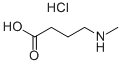
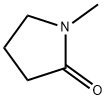
4-(Methylamino)butanoic acid Hydrochloride is the salt form of N-Methyl-4-aminobutyric Acid (M285745) which is a GABA derivative and hydrolysis product of the industrial solvent, N-methyl-2-pyrrolidinone. Biologically it is a product of nicotine catabolism in bacteria and inhibits L-Carnitine from undergoing β-oxidation in mammals. It is commonly found in skin products to prevent wrinkles.
reaction suitability
reaction type: solution phase peptide synthesis
Synthesis
The general procedure for the synthesis of hydrogen 4-(methylamino)butyrate from N-methylpyrrolidone is as follows: N-methyl-2-pyrrolidone is added to a reaction vessel with concentrated hydrochloric acid. The mixture was placed in an external oil bath, stirred and refluxed at 165 °C for 9 hours, during which time additional additions of concentrated hydrochloric acid were required. Upon completion of the reaction, the hydrochloric acid was removed by distillation under reduced pressure. The remaining solid was dissolved in cold acetone, stirred and cooled until complete crystallization. The resulting white solid was cryoprecipitated, filtered and washed twice with cold acetone and finally dried. The melting point of the product is 119-120°C. The mother liquor was concentrated to recover part of the product with a total yield of 90%.
References
[1] Patent: CN108003044, 2018, A. Location in patent: Paragraph 0009; 0010; 0011
[2] Synthesis, 1981, # 6, p. 468 - 469
[3] Bioorganic and Medicinal Chemistry, 2008, vol. 16, # 3, p. 1376 - 1392