Description
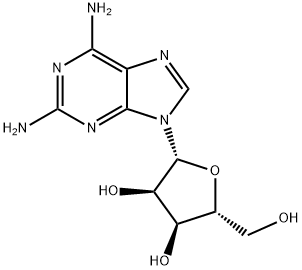
2-Aminoadenosine is a known analogue of adenosine that engages in three hydrogen bonds of the W-C type, adding considerable stability to the double helix.
Chemical Properties
White Powder
Uses
2-Aminoadenosine is a nucleoside analog as inhibitor or substrate of adenosine kinase from M. tuberculosis. It is also used to synthesize 2′-O-methyl and 3′-O-methyl Guanosine.
Definition
ChEBI: 2-Aminoadenosine is a purine nucleoside.
Synthesis
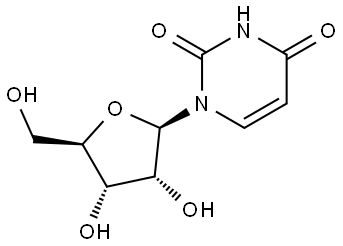
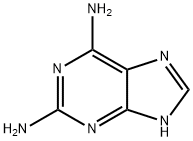
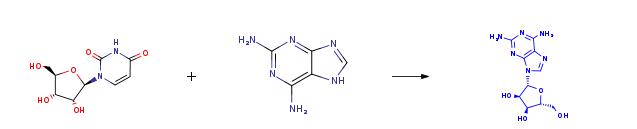
The synthesis of 2-aminoadenosine (2-AA): Assays were performed in 5 and 10% of aprotic dipolar co-solvents, at 60°C, twelve units/ml cell lysate were added to 150 ml of a solution kept thermostatically at 60 °C, and having the following composition of substrate solutions: 15mM Uridine/2 ' -Deoxyuridine,5 mM 2,6-Diaminopurine, and 30 mM potassium phosphate buffer, pH 7. After 5 hours, the reaction mixture was filtered by centrifugation at 2000 x g for 30 min, at 4°C, through an Amicon ultra-4 Centrifugal Filter Devices (Millipore, Bedford, MA) with a 3000-Da cutoff, and the filtrate was recovered.
Structure and conformation
2-Aminoadenosine contains several highly polar amino and hydroxyl groups, making the molecule highly polar overall. Consequently, it is poorly soluble in nonpolar organic solvents but soluble in polar organic solvents.
Mode of action
2-Aminoadenine inhibits the growth of certain cancer cells by suppressing the activity of DNA and RNA polymerases, which are essential for DNA and RNA synthesis, respectively.
References
[1] Pyrazolo[3,4-d]pyrimidine ribonucleosides related to 2-aminoadenosine and isoguanosine: synthesis, deamination and tautomerism. DOI:
10.1039/B708736E [2] An Efficient Process for Synthesis of 2′-O-methyl and 3′-O-methyl Guanosine from 2-aminoadenosine Using Diazomethane and the Catalyst Stannous Chloride. DOI:
10.1080/15257770500544529