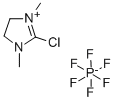
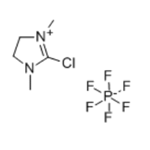
Synthesis
Potassium hexafluorophosphate (1.32 g, 7.2 mmol) was added to a solution of 2-chloro-1,3-dimethyl-2-imidazolium chloride (1.24 g, 7.3 mmol) in dry acetonitrile (2 mL). The reaction mixture was then stirred at room temperature for 10 minutes. After the reaction was complete, the mixture was filtered through a diatomaceous earth filter to remove insoluble solids. The filtrate was then concentrated under vacuum, and the residue was dissolved in a small amount of acetonitrile (approximately 2 mL). The solution was then poured into diethyl ether, and a significant precipitate was observed to form in the reaction mixture. The precipitate was collected by vacuum filtration to obtain the target product, 2-Chloro-1,3-dimethylimidazolidinium hexafluorophosphate.
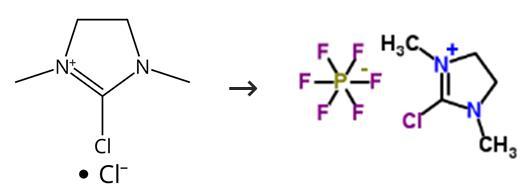
Figure 2. Synthetic route of 2-Chloro-1,3-dimethylimidazolidinium hexafluorophosphate
Chemical Properties
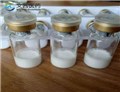
White crystalline powder
Uses
Reactant for synthesis of:
Diazo-transfer reagents
Reagent for synthesis of:
Cannabinoid CB1 receptor agonists
Selective small-molecule melanocortin-4 receptor agonists
Imidazoles as selective cannabinoid CB2 receptor antagonists
Cyclic alpha-peptoids
Cyclic melanotropin peptide analogues selective for the human melanocortin-4 receptor
General Description
2-Chloro-1,3-dimethylimidazolidinium hexafluorophosphate is a reagent used for the coupling and esterification of sterically hindered amino acids.
[1]
reaction suitability
reaction type: Coupling Reactions
Solubility in organics
2-Chloro-1,3-dimethylimidazolidinium hexafluorophosphate is soluble in DMF; partially soluble in H2O, MeOH, EtOAc, CH2Cl2, and CHCl3.
storage
2-Chloro-1,3-dimethylimidazolidinium hexafluorophosphate (CIP) can be stored refrigerated for at least 5 years without loss of reactivity. CIP is an irritant and should be used in a fumehood, when possible.
References
1. (a) Humphery, J. M.; Chamberlin, R., Chem. Rev. 1997, 97, 2243. (b) Albericio, F.; Carpino, L. A., Methods Enzymol. 1997, 289, 104