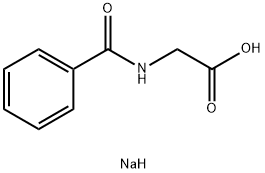
Sodium hippurate, 98% (Hippuric acid, 100 mg/kg; i.p.; five times per week; 10 weeks) promotes renal fibrosis and dysfunction in 5/6 nephrectomized rats[4].
Sodium hippurate, 98% (Hippuric acid, 10 mg/kg; p.o.; daily; 4 weeks) alleviates hyperuricemia in mice by promoting intestinal urate excretion via enhancing ABCG2-mediated transport[5].
Sodium hippurate, 98% (Hippuric acid, 50-150 mg/kg; p.o.; once daily; 7 days) alleviates DSS-induced colitis in male C57BL/6J mice, as shown by reduced clinical activity, improved intestinal barrier integrity, and modulated gut microbiota[6].
| Animal Model: | Male Sprague Dawley rats (7-week-old, weight not specified); 5/6 nephrectomy model[4] |
| Dosage: | 100 mg/kg |
| Administration: | Intraperitoneal injection, five times per week, for 10 weeks |
| Result: | Significantly increased levels of serum creatinine (SCr), blood urea nitrogen (BUN), and HA.
Showed increased tubulointerstitial fibrosis and glomerulosclerosis, with larger COL1A1-, VIM-, and ACTA2-positive areas.
Revealed lower NRF2 levels.
Decreased activities of SOD, CAT, and GSH- Px.
Increased MDA levels in the kidneys, indicating redox imbalance.
|