Chemical Properties
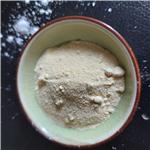
yellow crystalline powder
Uses
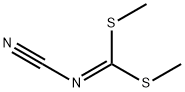
Dimethyl cyanodithioiminocarbonate has been used in the synthesis of 4-methylthiopyrazolo[1,5-a]-1,3,5-triazines, methylsulfanylpyrimidines, cyanoguanidines and N-aryl-6-methylsulfanyl-4-oxopyrimidine-5-carbonitriles. It has been also used in the synthesis of methylsulfanyl derivatives of azoloazines and azoloazoles.
Synthesis
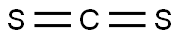
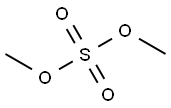
Dimethyl N-cyanoimido-S,S-dithiocarbonate was synthesized according to the method reported in the literature. The procedure was as follows: cyanamide (0.02 mol, 50% aqueous solution) was dissolved in 80 mL of water, followed by addition of potassium hydroxide (0.04 mol) and stirred for 45 min at room temperature. Carbon disulfide was then added and the reaction mixture was heated to 40°C. After complete dissolution of carbon disulfide (about 2 hours), iodomethane (0.04 mole) was added and stirred overnight at room temperature. After completion of the reaction, the precipitate was collected by filtration, the solid product was washed with water, dried under vacuum at room temperature to constant weight and finally purified by recrystallization from ethanol. The resulting product was dimethyl cyanodithioiminocarbonate (1c) in 71% yield with a melting point of 58-60°C. Infrared spectra (FT-IR, ν/cm1): 1678, 2176. nuclear magnetic resonance hydrogen spectra (1H NMR, 300 MHz, DMSO-d6) δ: 2.90 (s, 6H, 2×SCH3). NMR carbon spectra (13C NMR, 75 MHz, CDCl3) δ: 18.8, 115.3, 186.8.
References
[1] Tetrahedron, 2008, vol. 64, # 39, p. 9309 - 9314
[2] Phosphorus, Sulfur and Silicon and the Related Elements, 2016, vol. 191, # 5, p. 759 - 764
[3] Journal of the Chemical Society, Perkin Transactions 1: Organic and Bio-Organic Chemistry (1972-1999), 1988, p. 2309 - 2314
[4] Synthetic Communications, 2004, vol. 34, # 5, p. 805 - 815
[5] Synthetic Communications, 2006, vol. 36, # 6, p. 743 - 753