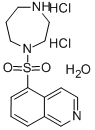
Description
Rho-associated kinase (ROCK), an effector of the small GTP-binding protein Rho, plays an important role in various cellular functions including vascular smooth muscle contraction, proliferation, and migration as well as inflammatory cell mobility. HA-1077 is a potent inhibitor of ROCK2 and additionally inhibits protein kinase c-related kinase 2 (PRK2), mitogen- and stress-activated protein kinase (MSK1), and mitogen activated protein kinase-activated protein kinase 1b (MAPKAP-K
1b) with IC
50 values of 1.9, 4, 5, and 15 μM, respectively. By inhibiting the activity of ROCK, HA-1077 has been shown to reduce blood vessel constriction, decrease pulmonary arterial pressure, inhibit tumor angiogenesis, and improve insulin signaling in various rodent models. While originally marketed for the prevention of cerebral vasospasm in patients with subarachnoid hemorrhage, oral formulations of HA-1077 are used for the treatment of a wide range of cardiovascular diseases including pulmonary arterial hypertension and stable angina.
Chemical Properties
White fine crystalline powder
Uses
HA-1077 dihydrochloride has been used:
- to relax cantilevers
- in the functional assessment of isolated coronary arteries
- to investigate the effect of azaindole-1, fasudil on acute hypoxic pulmonary vasoconstriction (HPV)
Uses
Fasudil dihydrochloride is used in the inhibition of contractile responses to potassium chloride, phenylephnne (PHE), prostaglandin and hepatic stellate cells spreading. It is also used in the formation of stress fibers and in medicine.
Biochem/physiol Actions
Novel vasodilator agent which inhibits vascular smooth muscle contraction by acting as an intracellular Ca2+ antagonist.
in vivo
Fasudil dihydrochloride (10 mg/kg; i.v.; 1 h before operation) exhibits protectable effects on cardiovascular disease and reduces the activation of JNK and attenuates mitochondrial-nuclear translocation of AIF under ischemic injury[5].
Fasudil dihydrochloride (50 mg/kg/d; i.p.) inhibits acute and relapsing EAE (experimental autoimmune encephalomyelitis) induced by proteolipid protein PLP p139-151, reduces lymphocytes proliferation, results downregulation of interleukin (IL)-17 and a marked decrease of the IFN-γ/IL-4 ratio[6].
Fasudil dihydrochloride (100 mg/kg/d; p.o.) significantly reduces incidence and pathological examination score of EAE (experimental autoimmune encephalomyelitis) in SJL/J mice, decreases inflammation, demyelination, axonal loss and APP positivein spinal cord in mice[6].
| Animal Model: | Myocardial ischemia and reperfusion in rat (250-300 g)[5] |
| Dosage: | 10 mg/kg |
| Administration: | Intravenous injection; 1 h before operation |
| Result: | Activated the Rho-kinase, JNK, and resulted AIF translocated to the nucleus.
Inhibited Rho-kinase activity, and reduced myocardial infarct size and heart cell apoptosis.
|
IC 50
PKA: 4.58 μM (IC
50); PKC: 12.3 μM (IC
50); PKG: 1.65 μM (IC
50); p160ROCK: 0.33 μM (Ki); ROCK2: 0.158 μM (IC
50)
References
[1] SHUNSUKE TAWARA Hiroaki S. Progress of the study of rho-kinase and future perspective of the inhibitor.[J]. Yakugaku zasshi: Journal of the Pharmaceutical Society of Japan, 2007, 127 3: 501-514. DOI:
10.1248/yakushi.127.501[2] S. DAVIES. Specificity and mechanism of action of some commonly used protein kinase inhibitors.[J]. The Ukrainian Biochemical Journal, 2000, 24 1: 95-105. DOI:
10.1042/bj3510095[3] MASAHIKO OKA. Rho kinase-mediated vasoconstriction is important in severe occlusive pulmonary arterial hypertension in rats.[J]. Circulation research, 2007, 100 6: 923-929. DOI:
10.1161/01.res.0000261658.12024.18[4] LIMEI YIN. Fasudil inhibits vascular endothelial growth factor-induced angiogenesis in vitro and in vivo.[J]. Molecular Cancer Therapeutics, 2007, 6 5: 1517-1525. DOI:
10.1158/1535-7163.mct-06-0689[5] YUICHI KIKUCHI. A Rho-kinase inhibitor, fasudil, prevents development of diabetes and nephropathy in insulin-resistant diabetic rats.[J]. Journal of Endocrinology, 2007, 192 3: 595-603. DOI:
10.1677/joe-06-0045