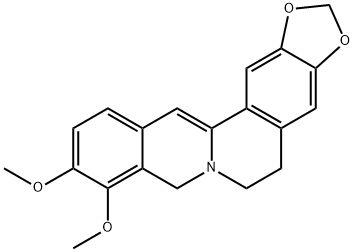
Description
Dihydroberberine: a natural derivative of Berberine
Dihydroberberine (DHB) is emerging as a popular supplement for its enhanced bioavailability and therapeutic efficacy compared to its precursor, Berberine. Berberine, a natural compound, has been widely used for its antimicrobial and anti-inflammatory properties. It has also shown promise in improving glucose and lipid metabolism, supporting cardiovascular health, and offering neuroprotective effects.
Chemical Properties
Yellow crystals, soluble in organic solvents such as methanol, ethanol, and DMSO, derived from Berberis.
Uses
Dihydroberberine is a derivative Berberine, an isoqinoline alkaloid shown to have a chemopreventive property against colon tumor formation by inhibiting the enzyme cyclooxygenase-2 (cox-2) which is abundantly expressed in colon cancer cells.
Definition
ChEBI: Lambertine is an alkaloid.
Synthesis
Briefly, a solution of sodium hydroxide (27 mL, 5%) containing sodium borohydride (2.7 g) was added dropwise to a stirred solution of berberine chloride (11.06 g) and potash (13.1 g) in methanol (150 mL). After the reaction mixture was stirred at ambient temperature for 3 h, the precipitate was filtered and washed with 30% ethanol (200 mL), followed by 80% ethanol (100 mL). The resulting green-brown crystals were collected by filtration and dried at 30 °C to afford dihydroberberine (9.4 g, 85% yield)[1].
in vivo
Dihydroberberine (250 mg/kg; intragastric gavage, once every other day for 14 days) effectively inhibits tumor growth and proliferation in the mouse NCI-H460 xenograft model and exhibits synergistic with Sunitini[2].
References
[1] Lihua Tan . “Dihydroberberine, a hydrogenated derivative of berberine firstly identified in Phellodendri Chinese Cortex, exerts anti-inflammatory effect via dual modulation of NF-κB and MAPK signaling pathways.” International immunopharmacology 75 (2019): Article 105802.
[2] Mari, Giacomo, et al. “Synthesis of New Dihydroberberine and Tetrahydroberberine Analogues and Evaluation of Their Antiproliferative Activity on NCI-H1975 Cells.”
Beilstein Journal of Organic Chemistry, vol. 16, 2020, pp. 1606–16,
https://doi.org/10.3762/bjoc.16.133.