Uses
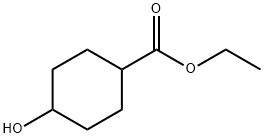
Ethyl 4-hydroxycyclohexanecarboxylate, cis + trans is used in the synthesis of other chemicals and as pharmaceutical intermediate.
Synthesis Reference(s)
The Journal of Organic Chemistry, 30, p. 4145, 1965
DOI: 10.1021/jo01023a039
Synthesis
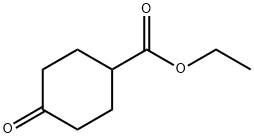
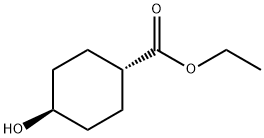
General procedure for the synthesis of ethyl trans-4-hydroxycyclohexanecarboxylate from ethyl 4-oxocyclohexanecarboxylate: ethyl 4-oxocyclohexanecarboxylate (13.5 g, 79 mmol) was dissolved in methanol (150 mL) at 0 °C and sodium borohydride (5.3 g, 140 mmol) was added slowly. The reaction mixture was stirred at room temperature for 3 hours. Upon completion of the reaction, the reaction was quenched by the addition of water (50 mL), followed by extraction with ethyl acetate (150 mL x 1, 50 mL x 2). The organic layers were combined, washed with water (50 mL), dried over anhydrous sodium sulfate, filtered and concentrated under reduced pressure. The residue was purified by silica gel column chromatography (eluent: hexane-ethyl acetate, ratio 1.5:1 to 1:1) to afford ethyl 4-hydroxycyclohexanecarboxylate (12 g, 88% yield, cis-trans ratio = 3:7) as a clear oil.1H NMR (300 MHz, CDCl3, cis mixture) δ: 4.17-4.08 (m, 2H), 3.90 (bs. 0.3H), 3.68-3.57 (m, 0.7H), 2.42-1.28 (m, 9H), 1.27-1.22 (m, 3H) ppm.(Hydroxyl signal was not observed.)
References
[1] Journal of Medicinal Chemistry, 2016, vol. 59, # 19, p. 8967 - 9004
[2] Organic Process Research and Development, 2010, vol. 14, # 4, p. 883 - 889
[3] Patent: WO2005/80317, 2005, A2. Location in patent: Page/Page column 150
[4] Tetrahedron Letters, 2000, vol. 41, # 39, p. 7567 - 7570
[5] Patent: US5175290, 1992, A