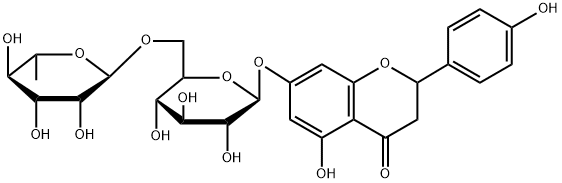
Chemical Properties
White to off-white powder
Uses
(2S)-Narirutin is a naturally occurring flavonoid that possess anti-allergic, anti-inflammatory, antiproliferative and anti-oxidant properties.
Definition
ChEBI: A disaccharide derivative that is (S)-naringenin substituted by a 6-O-(6-deoxy-alpha-L-mannopyranosyl)-beta-D-glucopyranosyl moiety at position 7 via a
lycosidic linkage.
Biological Activity
Narirutin is known to possess anti-allergic, anti-inflammatory, antioxidant, and anti-proliferative properties. It inhibits allergic eosinophilic airway inflammation in the mouse model. Narirutin also inhibits lipopolysaccharide (LPS)-induced inflammatory response by inhibiting nuclear factor-KB (NF-KB) and mitogen-activated protein kinases (MAPKs). It displays antioxidant and protective effects on attenuating alcohol-induced liver damage while co-consumed with alcohol in mice model, and can be useful in Alzheimerμs disease (AD) therapeutics.
in vivo
Narirutin (10 mg/kg, p.o ) reduces eosinophil counts in peripheral blood in OVA-challenged mice[2].
Narirutin (10 mg/kg, p.o ) block the OVA-induced increase in IL-4 but has no effect on the increase in IL-5[2].
| Animal Model: | Allergic asthma female NC/Nga mice model[2] |
| Dosage: | 0.1, 1 or 10 mg/kg |
| Administration: | Orally, 7d |
| Result: | Reduced eosinophil counts in peripheral blood.
Blocked the OVA-induced increase in IL-4.
|