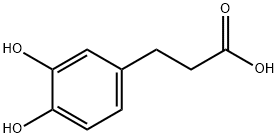
Description
Dihydrocaffeic acid is a polyphenol that has diverse biological activities, including antioxidant, neuroprotective, and enzyme inhibitory properties. Dihydrocaffeic acid scavenges ABTS (; IC
50 = 81.86 μg/ml) and 2,2-diphenyl-1-picrylhydrazyl (DPPH; ; IC
50 = 192.86 μg/ml) radicals and increases the survival of RGC-5 mouse retinal ganglion cells under hypoxic conditions and in the presence of S-nitroso-N-acetyl-D,L-penicillamine (SNAP; ) in a concentration-dependent manner. It also decreases endothelial nitric oxide synthase (eNOS) activity in EA.hy926 human endothelial cells in a concentration-dependent manner.
In vivo, dihydrocaffeic acid (30 mg/kg) decreases infarct size in a rat model of transient ischemia induced by middle cerebral artery occlusion (MCAO).
Chemical Properties
Brown Solid
Uses
3-(3,4-Dihydroxyphenyl)propionic acid it can be used to produce 3-(3,4-dihydroxy-phenyl)-propionic acid octyl ester by heating.
Uses
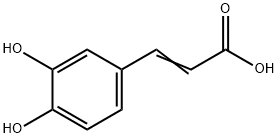
Dihydrocaffeic Acid is a natural product containing a catechol group with an α,β-unsaturated carboxylic acid chain. Dihydrocaffeic Acid has been shown to have hepatoprotective activity. Dihydrocaffei
c Acid is a metabolite of Caffeic Acid (C08000) with potent antioxidant properties.
Definition
ChEBI: A monocarboxylic acid that is 3-phenylpropionic acid substituted by hydroxy groups at positions 3 and 4. It is a metabolite of caffeic acid and exhibits antioxidant activity.
in vivo
Dihydrocaffeic acid (3-30 mg/kg, i.p.) protects against ischemia-induced neuronal damage and cerebral edema in a rat model of focal cerebral ischemia[8].
IC 50
Microbial Metabolite; p38 MAPK; Human Endogenous Metabolite
References
[1] HOLIM JANG. Effects of phenolic acid metabolites formed after chlorogenic acid consumption on retinal degeneration in vivo[J]. Molecular Nutrition & Food Research, 2015, 59 10: 1918-1929. DOI:
10.1002/mnfr.201400897[2] KYUNGJIN LEE Youngmin B Beom Joon Lee. Protective Effects of Dihydrocaffeic Acid, a Coffee Component Metabolite, on a Focal Cerebral Ischemia Rat Model.[J]. Molecules, 2015, 20 7: 11930-11940. DOI:
10.3390/molecules200711930[3] JUNJUN HUANG James M M Tomas de Paulis. Antioxidant effects of dihydrocaffeic acid in human EA.hy926 endothelial cells[J]. Journal of Nutritional Biochemistry, 2004, 15 12: Pages 722-729. DOI:
10.1016/j.jnutbio.2004.07.002