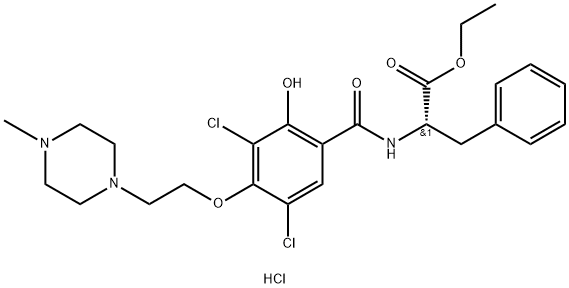
Description
JTE-607 (188791-09-5) inhibits inflammatory cytokine production in human peripheral blood mononuclear cells (PBMC’s) without causing immunosuppression: IC50’s = 11 nM (TNF-α), 5.9 nM (IL-1β), 8.8 nM (IL-6), 7.3 nM (IL-8), and 9.1 nM (IL-10).1It displayed efficacy in a mouse model of septic shock.2JTE-607 also showed inhibitory activity against acute myelogenous leukemia cell lines.3,4Recently, the mechanism of action of JTE-607 (a pro-drug, with the active species being the free acid) has been found to be inhibition of pre-messenger RNA endonuclease Cleavage and Polyadenylation Specificity Factor 3 (CPSF3).5,6This prevents release of newly synthesized mRNA’s resulting in read-through transcription and the formation of DNA-RNA hybrid R-loop structures. Transcripts down-regulated by JTE-607 were related to DNA damage-based phenotype.
Definition
ChEBI: JTE-607 dihydrochloride is the dihydrochloride salt of JTE-607. It is a cytokine inhibitor which suppresses the production of proinflammatory cytokines such as interleukin (IL-1beta), IL-6, IL-8, granulocyte macrophage colony stimulating factor (GM-CSF), and tumor necrosis factor (TNF-alpha). It acts as a pro-drug which is cleaved by carboxylesterase 1 (CES1) to its active free acid form, which then binds to cleavage and polyadenylation specificity factor 3 (CPSF3). It has a role as an anti-inflammatory agent, an antineoplastic agent, an apoptosis inducer, a prodrug, a cardioprotective agent and a CPSF3 inhibitor. It contains a JTE-607(2+).
References
[1] M KAKUTANI. JTE-607, a novel inflammatory cytokine synthesis inhibitor without immunosuppression, protects from endotoxin shock in mice.[J]. Inflammation Research, 1999, 48 8: 461-468. DOI:
10.1007/s000110050487[2] HIROYUKI IWAMURA K W Motohide Sato. Comparative study of glucocorticoids, cyclosporine A, and JTE-607 [(-)-Ethyl-N[3,5-dichloro-2-hydroxy-4-[2-(4-methylpiperazin-1-yl)ethoxy]benzoyl]-L-phenylalaninate dihydrochloride] in a mouse septic shock model.[J]. ACS Applied Electronic Materials, 2004: 1256-1263. DOI:
10.1124/jpet.104.072421[3] NAOFUMI UESATO . JTE-607, a multiple cytokine production inhibitor, ameliorates disease in a SCID mouse xenograft acute myeloid leukemia model[J]. Experimental hematology, 2006, 34 10: Pages 1385-1392. DOI:
10.1016/j.exphem.2006.05.016[4] NOBUYUKI TAJIMA. JTE-607, a multiple cytokine production inhibitor, induces apoptosis accompanied by an increase in p21waf1/cip1 in acute myelogenous leukemia cells[J]. Cancer Science, 2010, 101 3: 774-781. DOI:
10.1111/j.1349-7006.2009.01446.x[5] JUNYA KAKEGAWA. JTE-607, a multiple cytokine production inhibitor, targets CPSF3 and inhibits pre-mRNA processing[J]. Biochemical and biophysical research communications, 2019, 518 1: Pages 32-37. DOI:
10.1016/j.bbrc.2019.08.004[6] NATHAN T. ROSS. CPSF3-dependent pre-mRNA processing as a druggable node in AML and Ewing’s sarcoma[J]. Nature chemical biology, 2019, 16 1: 50-59. DOI:
10.1038/s41589-019-0424-1