Description
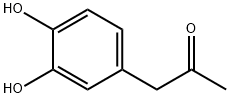
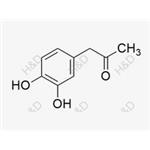
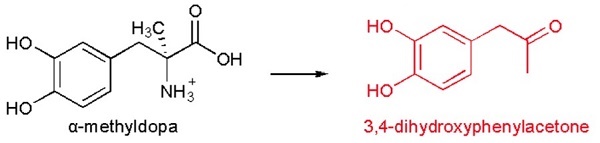
3'',4''-Dihydroxyphenylacetone (Item No. 19522) is an analytical reference standard. It is a minor metabolite of 3,4-MDEA (Item Nos.
14085 |
15689), MDMA, and α-methyldopa produced by oxidative deamination. This product is intended for forensic and research applications.
Description
3',4'-Dihydroxypropiophenone, also known as DOPA, is a metabolite of dopamine, which is produced in the brain and kidneys. DOPA is a precursor to the synthesis of melanin, which is found in skin cells. Glutamate dehydrogenase converts DOPA to 3-methoxytyramine, which can be detected chromatographically in urine samples. Examining a urine sample for DOPA testing can be used to diagnose Parkinson's disease. DOPA may also be detected in plasma in patients with bacterial and urinary tract infections
Chemical Properties
Thick Yellow Oil
Uses
A metabolite of racemic 3,4-methylenedioxyethylamphetamine.
Uses
3',4'-Dihydroxyphenylacetone , MDMA, and α-methyldopa produced by oxidative deamination. This product is intended for forensic and research applications.
Production Methods
3,4-dihydroxylphenylacetaldehyde (DHPAA) synthase catalyzes a complicated decarboxylation-deamination process of α-methyl dopa (AMD), leading to the production of 3,4-dihydroxyphenylacetone.
Definition
ChEBI: 3,4-Dihydroxyphenylacetone is an alkylbenzene.
References
[1] H. K. LIM R. L F. In vivo and in vitro metabolism of 3,4-(methylenedioxy)methamphetamine in the rat: identification of metabolites using an ion trap detector[J]. Chemical Research in Toxicology, 1988, 1 6: 370-378. DOI:
10.1021/tx00006a008[2] H K ENSSLIN. Metabolism of racemic 3,4-methylenedioxyethylamphetamine in humans. Isolation, identification, quantification, and synthesis of urinary metabolites.[J]. Drug Metabolism and Disposition, 1996, 24 8: 813-820.
[3] MARIARITA BERTOLDI. Reaction of Dopa Decarboxylase with α-Methyldopa Leads to an Oxidative Deamination Producing 3,4-Dihydroxyphenylacetone, an Active Site Directed Affinity Label[J]. Biochemistry Biochemistry, 1998, 37 18: 6552-6561. DOI:
10.1021/bi9718898