Description
C-DIM12 is a
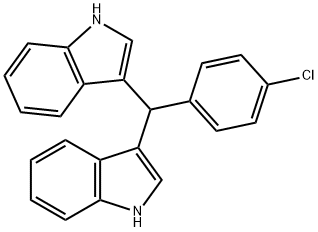
para-phenyl-substituted diindolylmethane (C-DIM) that is an orally bioavailable activator of nuclear receptor-related protein 1 (Nurr1/NR4A2). It is selective for Nurr1, not activating Nur77, neuron-derived orphan receptor 1 (Nor1), or the retinoid X receptor (RXR) in parallel luciferase assays. C-DIM12 (2.5-10 μM) inhibits proliferation of Ku7 and 253J B-V bladder cancer cells in a dose-dependent manner and induces apoptosis of KU7 cells in a Nurr1-dependent manner. In an orthotopic nude mouse model, C-DIM12 suppresses bladder cancer cell growth by 44 and 59% at doses of 12.5 and 25 mg/kg, respectively. C-DIM12 has neuroprotective properties, preventing dopaminergic cell loss and reducing the expression of NF-κB in the substantia nigra pars compacta in an MPTP mouse model of Parkinson’s disease. It also has analgesic and anti-inflammatory activity in the tail immersion and carrageenan paw edema assays at a dose of 100 mg/kg, without causing ulcers in rats.
Uses
C-DIM12 is a potent, orally active Nurr1 antagonist. C-DIM12 inhibits the tumor growth and autophagy, and induces the cell apoptosis. C-DIM12 has anti-inflammatory and neuroprotective effects, and can be used for cancer and neurological disease study[1][2][3].
References
[1] TERUO INAMOTO. 1,1-Bis(3’-indolyl)-1-(p-chlorophenyl)methane activates the orphan nuclear receptor Nurr1 and inhibits bladder cancer growth.[J]. Molecular Cancer Therapeutics, 2008: 3825-3833. DOI:
10.1158/1535-7163.mct-08-0730[2] XI LI Stephen S Syng Ook Lee. Structure-dependent activation of NR4A2 (Nurr1) by 1,1-bis(3′-indolyl)-1-(aromatic)methane analogs in pancreatic cancer cells[J]. Biochemical pharmacology, 2012, 83 10: Pages 1445-1455. DOI:
10.1016/j.bcp.2012.02.021[3] BRIANA R DE MIRANDA. The Nurr1 Activator 1,1-Bis(3’-Indolyl)-1-(p-Chlorophenyl)Methane Blocks Inflammatory Gene Expression in BV-2 Microglial Cells by Inhibiting Nuclear Factor κB.[J]. Molecular Pharmacology, 2015, 87 6: 1021-1034. DOI:
10.1124/mol.114.095398[4] Neuroprotective efficacy and pharmokinetic behavior of novel anti-inflammatory para phenyl substituted diindolylmethanes ina a mouse model of Parkinson’s disease