
2642-98-0
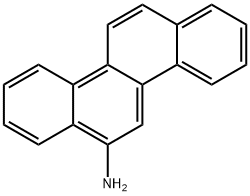
基本信息
6-氨基屈
6-CHRYSENAMINE
AMINOCHRYSENE
AMINOCHRYSENE, 6-
TIMTEC-BB SBB003194
6-Amc
Chrysenex
Chrysonex
ADCA
chrysen-6-ylamine
6-AMINOCHRYSENE 97% SUSPECTED CANCER AGENT
Chrysen-6-amine
Chrysene-12-amine
Crysonex
物理化学性质
| 熔点 | 209-211 °C(lit.) |
| 沸点 | 376.18°C (rough estimate) |
| 密度 | 0.8933 (rough estimate) |
| 折射率 | 1.4500 (estimate) |
| 储存条件 | 2-8°C |
| 溶解度 | 丙酮(微溶)、氯仿(微溶)、甲醇(微溶、加热) |
| 酸度系数(pKa) | 4.32±0.30(Predicted) |
| 形态 | 固体 |
| 颜色 | 黄色到棕色 |
| 水溶解性 | 155ug/L(24 ºC) |
| Merck | 13,2275 |
| CAS 数据库 | 2642-98-0(CAS DataBase Reference) |
安全数据
| 危险性符号(GHS) |  GHS07 |
| 警示词 | 警告 |
| 危险性描述 | H302 |
| 防范说明 | P301+P312+P330 |
| 危险品标志 | Xn |
| 危险类别码 | R22 |
| 安全说明 | S45-S36/37/39-S26 |
| WGK Germany | 3 |
| RTECS号 | GC0500000 |
| 海关编码 | 29214900 |
图谱信息
7-胺基去乙酰氧基头胞烷酸(2642-98-0)质谱(MS)7-胺基去乙酰氧基头胞烷酸(2642-98-0)核磁图(1HNMR)7-胺基去乙酰氧基头胞烷酸(2642-98-0)核磁图(13CNMR)7-胺基去乙酰氧基头胞烷酸(2642-98-0)红外图谱(IR1)7-胺基去乙酰氧基头胞烷酸(2642-98-0)Raman光谱7-胺基去乙酰氧基头胞烷酸价格(试剂级)
| 报价日期 | 产品编号 | 产品名称 | CAS号 | 包装 | 价格 |
| 2026/09/15 | HY-108315 | 7-胺基去乙酰氧基头胞烷酸 6-Aminochrysene | 2642-98-0 | 10 mg | 370元 |
| 2026/09/15 | HY-108315 | 7-胺基去乙酰氧基头胞烷酸 6-Aminochrysene | 2642-98-0 | 10mM * 1mLin DMSO | 407元 |
| 2026/09/15 | HY-108315 | 7-胺基去乙酰氧基头胞烷酸 6-Aminochrysene | 2642-98-0 | 25mg | 860元 |
常见问题列表
6-Aminochrysene inhibits the hydroxylation of aniline, 0-demethylation of p-nitroanisole, and N-demethylation of aminopyrine by rat liver microsomes. Pre-treatment of rats with 6-aminochrysene markedly decreases the N-demethylation in vitro but significantly increases the hydroxylation and the 0-demethylation.
6-Aminochrysene is an inhibitor of the growth of several solid experimental tumours in vivo and has a cancerostatic effect on human breast cancer. Long term topical skin application of 6-Aminochrysene to mice induces development of benign skin tumors after 3 months and of skin malignancies after 7 months. Female mice respond earlier than males. Induction of skin tumors is more rapid when 6-Aminochrysene is applied ventrally instead of dorsally. Urinary excretion is about twice as high after skin application than after oral administration.