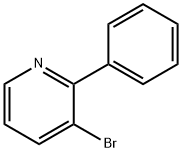
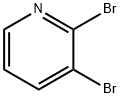
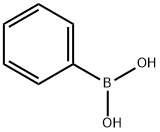
General procedure for the synthesis of 3-bromo-2-phenylpyridine from 2,3-dibromopyridine and phenylboronic acid: a screw-capped vial was charged with a solvent mixture of acetonitrile (MeCN) and methanol (MeOH) (2:1, 15 mL), 2,3-dibromopyridine (474 mg, 2.0 mmol), phenylboronic acid (2.1 mmol), potassium carbonate (K2CO3, 560 mg, 4.0 mmol), triphenylphosphine (PPh3, 52 mg, 10 mol%) and palladium acetate (Pd(OAc)). 4.0 mmol), triphenylphosphine (PPh3, 52 mg, 10 mol%) and palladium acetate (Pd(OAc)2, 23 mg, 5 mol%). The reaction mixture was displaced three times with argon to remove oxygen, sealed and placed in a 50°C oil bath with stirring for 24 hours. Upon completion of the reaction, the mixture was cooled to room temperature and filtered through a diatomaceous earth pad to remove solid impurities. The filtrate was concentrated under reduced pressure and the resulting residue was dissolved in dichloromethane (CH2Cl2, 20 mL) and subsequently washed with water (3 x 10 mL) and the organic phase was dried over anhydrous sodium sulfate (Na2SO4). The solvent was removed by evaporation under reduced pressure and the residue was purified by silica gel column chromatography with the eluent being petroleum ether-ethyl acetate (30:1) to afford pure 3-bromo-2-phenylpyridine (2a) in the yield of 387 mg (83%) as a colorless oil.