Chemical Properties
It is typically an off-white powder or a brown-yellow liquid. The active ingredients of commercial pectinase are primarily three enzymes. One is pectin methylesterase (Pectin pectylhydrolase) (EC 3.1.1.11), which catalyzes the removal of the methyl ester group from methyl pectin, producing polygalacturonic acid bonds and methanol. Another is polygalacturonase (Polygalacturonase; EC 3.2.1.15), which hydrolyzes the α-1,4-linked galacturonic acid groups in pectin into reducing sugars. The third is pectin lyase (Pectin lyase; EC 4.2.2.10), which breaks down pectin into oligosaccharides. In addition, β-glucanase (EC 3.2.1.6), β-glucosidase (EC 3.2.1.21), and xylanase (EC 3.2.1.32) play minor roles. The active temperature is 40-50°C, and the optimal pH is 3.5-4.0. Iron, copper, and zinc ions have a significant inhibitory effect. It is soluble in water.
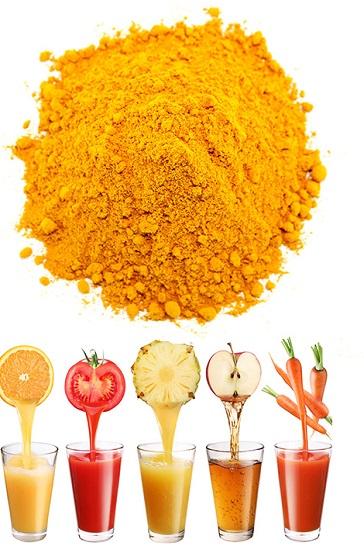
Natural products are widely found in higher plants (such as citrus fruits, apples, tomatoes, etc.) and microorganisms.
Biochem/physiol Actions
Pectolytic enzyme preparation produced from a selected strain of Aspergillus niger: contains mainly pectintranseliminase, polygalacturonase, and pectinesterase and small amounts of hemicellulases and cellulases. Pectinases hydrolyses pectin, which is a component of the cell wall. They may attack methyl-esterified pectin or de-esterified pectin. It is a source of pectinase activity, also containing cellulase and hemicellulase activities.Pectinase catalyzes the random hydrolysis of a-(1-4)-Dgalactosiduronic linkages in pectin and other galacturonans.


 ;
;