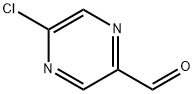
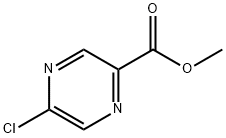
Diisobutylaluminum hydride (1.0 M toluene solution, 6.4 mL, 6.40 mmol) was added slowly and dropwise to a cooled solution of methyl 5-chloropyrazine-2-carboxylate (690 mg, 4.00 mmol) in tetrahydrofuran (THF, 13.6 mL) at -55 °C. The reaction mixture was stirred continuously at this temperature for 1 hour. Subsequently, the reaction was quenched by addition of saturated aqueous ammonium chloride solution (25 mL) and ethyl acetate (EtOAc, 25 mL). If an emulsion was formed, an aqueous 2N hydrochloric acid solution (5 mL) was added to clarify. The organic and aqueous layers were separated and the aqueous layer was then extracted with ethyl acetate. The combined organic layers were washed with saturated aqueous sodium chloride, dried over anhydrous magnesium sulfate and concentrated under reduced pressure. The resulting residue was purified by fast silica gel column chromatography with an elution gradient of 0 to 50% ethyl acetate in heptane solution. The product grades were collected and evaporated to dryness under reduced pressure to give 5-chloropyrazine-2-carbaldehyde (385 mg, 68% yield) as a beige solid.1H NMR (500 MHz, CDCl3, 27 °C) δ 8.75 (1H, d), 8.96 (1H, d), 10.15 (1H, d).