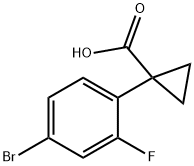
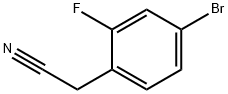
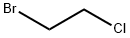
Step 1. Sodium hydroxide (50% aqueous solution, 5.71 mL, 0.149 mol) was added to a mixture of 4-bromo-2-fluorobenzyl cyanide (3.16 g, 0.0145 mol), benzyltriethylammonium chloride (0.26 g, 0.0011 mol), and 1-bromo-2-chloroethane (2.51 mL, 0.0302 mol), and the reaction was allowed to proceed at 50 °C for for 10 hours. After completion of the reaction, the mixture was poured into ice water (50 mL) and extracted with ether (2 x 50 mL). The organic phases were combined, washed with brine (30 mL), dried over anhydrous magnesium sulfate, filtered and concentrated under reduced pressure to give 2.88 g of brown solid. The formation of the nitrile intermediate was confirmed by 1H-NMR.
Step 2. 50% aqueous sodium hydroxide solution (3.8 mL) and ethylene glycol (20 mL) were added to the residue obtained above, and the mixture was heated to 100 °C and stirred overnight. After the reaction was completed, the mixture was poured into water (50 mL) and washed with ether (2 x 50 mL). The aqueous layer was cooled with an ice bath and acidified slowly by adding 6N hydrochloric acid to pH=2. The product was extracted with ethyl acetate (2 x 100 mL), dried over anhydrous magnesium sulfate and concentrated to give 1.634 g (70% yield) of the target product 1-(4-bromo-2-fluorophenyl)cyclopropanecarboxylic acid. The structure of the product was confirmed by 1H NMR.