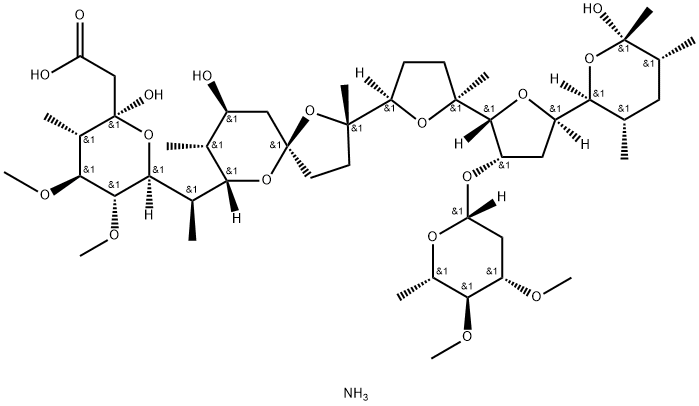
Chemical Properties
White Solid
Usage
Maduramcin ammonium is prepared from maduramicin by taking advantage of the acidic carboxylic acid which ionises and readily forms the salt in ammonium hydroxide solutions. The ammonium salt is the preferred formulation in animals to prevent coccidiosis and to promote growth. Maduramicin is also active against Treponema and Cryptosporidium. Maduramicin is an ionophore, forming complexes with monovalent cations, with a higher affinity for K+ than Na+.
Usage
Maduramicin ammonium is prepared from maduramicin by taking advantage of the acidic carboxylic acid which ionises and readily forms the salt in ammonium hydroxide solutions. The ammonium salt is the preferred formulation in animals to prevent coccidiosis and to promote growth. Maduramicin is also active against Treponema and Cryptosporidium. Maduramicin is an ionophore, forming complexes with monovalent cations, with a higher affinity for K+ than Na+.
Usage
Polyether antibiotic chemically related to the lonomycins. Coccidiostat
Uses
Maduramcin ammonium is prepared from maduramicin by taking advantage of the acidic carboxylic acid which ionises and readily forms the salt in ammonium hydroxide solutions. The ammonium salt is the preferred formulation in animals to prevent coccidiosis and to promote growth. Maduramicin is also active against Treponema and Cryptosporidium. Maduramicin is an ionophore, forming complexes with monovalent cations, with a higher affinity for K+ than Na+.
Uses
Maduramicin ammonium is prepared from maduramicin by taking advantage of the acidic carboxylic acid which ionises and readily forms the salt in ammonium hydroxide solutions. The ammonium salt is the preferred formulation in animals to prevent coccidiosis and to promote growth. Maduramicin is also active against Treponema and Cryptosporidium. Maduramicin is an ionophore, forming complexes with monovalent cations, with a higher affinity for K+ than Na+.
Uses
Polyether antibiotic chemically related to the lonomycins. Coccidiostat
Definition
ChEBI: Maduramicin is a glycoside.
in vivo
| Animal Model: | ICR mouse (Maduramicin-induced rhabdomyolysis model)[3] |
| Dosage: | 3.5, 7 mg/kg |
| Administration: | Oral gavage (p.o.), once daily for 7 days |
| Result: | Significantly reduced body weight, increased AST, ALT, LDH, BUN, and CK levels;
Caused that liver exhibited vacuolar degeneration, kidney showed renal tubular epithelial cell shedding, and myocardial and skeletal muscle fibers were disorganized and partially lysed. |
| Animal Model: | Wistar rats (Maduramicin-induced skeletal muscle injury model) |
| Dosage: | 1.75, 3.5, 7 mg/kg |
| Administration: | Oral gavage (p.o.), once daily for 7 days |
| Result: | Dose-dependently increased LC3-II and p62 protein levels in skeletal muscle, indicating impaired autophagic flux;
Upregulated eIF2α phosphorylation and ATF4 expression, activating endoplasmic reticulum stress;
Increased AMPK phosphorylation, suggesting activation of the AMPK signaling pathway. |