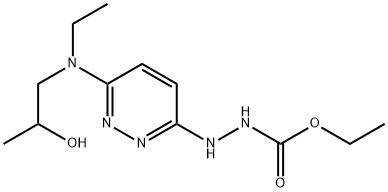
Description
Cadralazine is a vasodilatory antihypertensive reportedly better-tolerated and
longer-acting than hydralazine. It is useful as a second-line treatment in the management
of hypertension.
Chemical Properties
Crystallizes in acetone, melting point 160-162°C. pKa 6.0. UV absorption maximum: 248, 340 mM (ε 22100, 2250). Solubility (mg/ml): Water 1.3, Hydrochloric acid 235.0, Dimethyl sulfoxide 323.0, Methanol 21.0, Dioxane 18.6, Chloroform 8.5, Ether, Benzene, and Cyclohexane <0.1. Acute toxicity LD50 for rats and dogs (mg/kg): 269, approximately 400 by intravenous injection; 2060, >2000 by oral administration. Acute toxicity LD50 for mice (mg/kg): 700 by intraperitoneal injection.
Originator
ISF;(Smith Mine) (Italy)
Uses
Cadralazine relaxes arterial smooth muscle, thereby reducing peripheral vascular resistance and lowering blood pressure. It is used for hypertension.
Definition
ChEBI: Cadralazine is an organic molecular entity.
Brand name
Cadraten 21 cpr 20 mg;Cadraten 30 cpr 10 mg;Cadraten 30 cpr 15 mg;Cadratin;Cadrilan.
World Health Organization (WHO)
Cadralazine, a peripheral vasodilator, was introduced in 1989 for
the treatment of arterial hypertension.In 1992, its association with serious side
effects led to the refusal of registration in Norway. Animal experiments have
demonstrated drug-related impairment of thyroid function as well as potential carcinogenicity and genotoxicity. It remains available for treatment of hypertension
in Italy.