1. Install a thermometer and set up magnetic stirring in a 100mL three-neck flask. Add 20 mL of dichloromethane and cool the reaction flask in an ice bath to an internal temperature of 0-5°C.
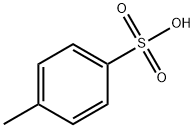
2. p-Toluenesulfonic acid monohydrate (380.44 mg, 2.0 mmol), bis(trichloromethyl)carbonate (236 mg, 0.80 mmol, 0.40 equiv), and potassium phosphate trihydrate (K3PO4-3H2O, 1.38 g, 6 mmol, 3 equiv) were added to the reaction flask sequentially, and the flask was stirred for 5 minutes.
3. Two drops of triethylamine (~20 mg, 0.10 equiv) were added dropwise to the reaction vial and after bubbles were observed, the ice bath was removed and the reaction mixture was allowed to warm up to room temperature. Stirring was continued for 20 minutes.
4. n-Propanol (120.2 mg, 2.0 mmol), triethylamine (202.4 mg, 2.0 mmol) and trimethylamine hydrochloride (13.1 mg, 0.2 mmol) were added sequentially and the mixture was stirred for 30 min at room temperature. The reaction process was monitored by TLC.
5. Upon completion of the reaction, the reaction mixture was filtered and the filter cake was washed with 5 mL of dichloromethane to remove unreacted salt.
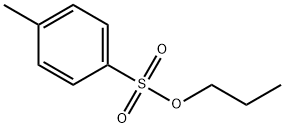
6. The filtrate was concentrated to dryness under reduced pressure to give 386 mg of propyl p-toluenesulfonate (yield: 90%).