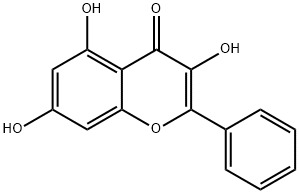
[1] GARRY DUTHIE Philip M. Antioxidant capacity of flavonoids in hepatic microsomes is not reflected by antioxidant effects in vivo.[J]. Oxidative Medicine and Cellular Longevity, 2012, 2012: 165127. DOI:
10.1155/2012/165127[2] WANG-JIAN ZHA. Galangin Abrogates Ovalbumin-Induced Airway Inflammation via Negative Regulation of NF-κB.[J]. Evidence-based Complementary and Alternative Medicine, 2013, 2013: 767689. DOI:
10.1155/2013/767689[3] S A QUADRI. The bioflavonoid galangin blocks aryl hydrocarbon receptor activation and polycyclic aromatic hydrocarbon-induced pre-B cell apoptosis.[J]. Molecular Pharmacology, 2000, 58 3: 515-525. DOI:
10.1124/mol.58.3.515[4] WENJING ZHANG. Galangin induces B16F10 melanoma cell apoptosis via mitochondrial pathway and sustained activation of p38 MAPK.[J]. Cytotechnology, 2013, 65 3: 447-455. DOI:
10.1007/s10616-012-9499-1[5] ALAINA M FORBES. Synthesis and anticancer activity of new flavonoid analogs and inconsistencies in assays related to proliferation and viability measurements.[J]. International journal of oncology, 2014, 45 2: 831-842. DOI:
10.3892/ijo.2014.2452[6] H P CIOLINO G C Y. The flavonoid galangin is an inhibitor of CYP1A1 activity and an agonist/antagonist of the aryl hydrocarbon receptor[J]. British Journal of Cancer, 1999, 79 9-10: 1340-1346. DOI:
10.1038/sj.bjc.6690216