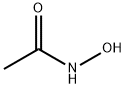
Acetohydroxamic acid (AHA) can be prepared by chemical synthesis and enzymatic methods (biocatalysis).
(1) Chemical synthesis
Using a 50% hydroxylamine hydrate solution (25 mL, 0.42 mol, diluted with 25 mL water) as the starting material, acetic anhydride (45 mL, 49.3 g, 0.42 mol) is added dropwise under magnetic stirring, during which the reaction temperature rises to 80 °C. After complete addition, the clear liquid is cooled to room temperature whilst continuing to stir. The product is then extracted with ethyl acetate (4 × 70 mL); the combined extracts are concentrated under reduced pressure to ~90 mL, cooled, and crystallised from acetone to yield 17.0 g of colourless AHA in a 55% yield with 98% purity[1].

(2) Enzymatic method (biocatalysis)
With acetamide (400 mM, 100 mL, in 0.1 M potassium phosphate buffer, pH 7.0) as the acyl donor and hydroxylamine (1.5 M, 50 mL) as the co-substrate, resting cells of Bacillus smithii IIIMB2907 (100 mg dcw) are incubated at 50 °C, pH 7.0, for 90 min (150 mL batch reaction), exploiting the acyltransferase activity of the amidase to transfer the acyl group of the amide to hydroxylamine. The reaction mixture is centrifuged (10,000 g, 10 min), the supernatant concentrated by rotary evaporation, purified by silica gel (60–120 mesh) column chromatography (chloroform elution), and dried under reduced pressure to afford 1.9 g AHA with 85% conversion and ~81% purification recovery[2].