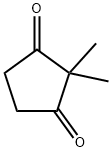
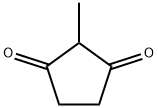
The reaction was carried out according to the literature method (Agosta, WC; Smith, AB J. Org. Chem. 1970, 35, 3856) using 2-methyl-1,3-cyclopentanedione (10.025 g, 89.4 mmol) and iodomethane (6.0 mL, 96.4 mmol). The above mixture was mixed with a water (25 mL)/dioxane (75 mL) solution of KOH (5.097 g, 90.8 mmol) and heated to reflux for 5 hours. Subsequently, a water (5 mL)/dioxane (15 mL) solution of KOH (2 g) and iodomethane (2.4 mL) was added and refluxing was continued for 3 hours. The reaction mixture was stirred overnight at room temperature. The following morning, a solution of KOH (2 g) and iodomethane (2.4 mL) in water (5 mL)/dioxane (15 mL) was added again and heated to reflux for 4 hours. After completion of the reaction, the mixture was cooled to room temperature and extracted with ether (1 x 100 mL, 3 x 75 mL). The ether extracts were combined, and the residue obtained after evaporation was mixed with 10% HCl (50 mL) and heated to boiling in an oil bath at 120°C (about 15 min). After cooling to room temperature, it was neutralized with saturated NaHCO3 solution (150 mL) and then extracted with dichloromethane (4 x 75 mL). The dichloromethane solutions were combined, dried over MgSO4, filtered and evaporated to afford the brown oily product 2,2-dimethylcyclopentane-1,3-dione (10.474 g, 83 mmol, 93% yield), which could be used in the next reaction without further purification.