1. Liquid ammonia is collected in a reactor under well ventilated conditions. Sodium metal (335 g, 15.23 mol) was added in batches and stirred until completely dissolved, forming a dark blue solution. This process takes about 15 minutes.
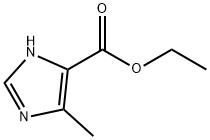
2. ethyl 4-methyl-5-imidazolecarboxylate (500 g, 3.25 mol) was suspended in 400 mL of anhydrous ethanol to form a wet powder. Over a period of about 30 minutes, this wet powder was carefully added in batches to the sodium-ammonia solution described above.
3. Upon completion of the addition, methanol (1 L) was slowly added. Subsequently, ammonium chloride (810 g, 15.28 mol) was added cautiously until the blue color of the solution faded, at which time the addition of the remaining ammonium chloride could be accelerated.
4. After the ammonium chloride has been added, the ammonia is evaporated using a cold water bath. Gradually increase the temperature of the water bath as the volume of the reaction mixture decreases. When most of the ammonia has been removed, switch to steam heating and remove the residual ammonia completely under vacuum, a process that takes 7-15 hours.
5. Isopropanol (6 L) was added to the residue and refluxed under vigorous stirring for 1 hour. Water (100 mL) was then added and stirring was continued for 10 minutes.
6. The mixture was cooled to about 40 °C, passed through hydrogen chloride gas to acidity and subsequently filtered. The filter cake was washed with hot isopropanol, and the filtrate was combined and concentrated to about 1 L. The mixture was then purged with acetone (4 L).
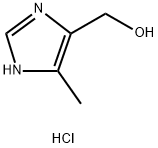
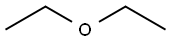
7. The concentrate was diluted with acetone (4 L) and ether (2 L) and the precipitated solid product was collected. Finally, the product was dried under vacuum at 60 °C to give 4-methyl-5-hydroxymethylimidazole hydrochloride in 94% yield.