Characteristics
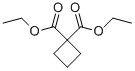
Diethyl 1,1-cyclobutanedicarboxylate is an alicyclic compound containing a cyclobutane skeleton and two ester groups. Its structural feature is that two ethoxycarbonyl groups (–COOCH₂CH₃) are attached to the same cyclobutane carbon atom, forming a geminal diester structure. Under acidic or basic conditions, the two ethyl ester groups can undergo hydrolysis to form 1,1-cyclobutanedicarboxylic acid. This reaction is an important step in the synthesis of diethyl ester to cyclobutanedicarboxylic acid. The latter is a key structural component of ligands related to carboplatin.
Preparation
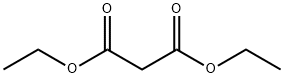
The preparation of diethyl 1,1-cyclobutanedicarboxylate is as follows:The major product is tetraethy1 1,1,5,5-pentanetetra-carboxylate II with diethyl malonate. To eliminate this side reaction, II was independently prepared by the addition of hydrogen bromide to diethyl allylmalonate (I) and then cyclized to II by treatment with sodium ethylate. The over-all yield from I is about 50%.

Hazard
Diethyl 1,1-cyclobutanedicarboxylate is an irritant; contact may cause skin irritation, severe eye irritation and respiratory tract irritation.
Synthesis
GENERAL METHOD: Diethyl malonate (2.53 mL, 17 mmol), 1,3-dibromopropane (22 mmol), potassium carbonate (K2CO3, 5.7 g, 42 mmol) and tetrabutylammonium bromide (TBAB, 0.27 g, 0.08 mmol) were added to dry N,N-dimethylformamide (DMF). The reaction mixture was stirred at room temperature for 16 hours. After completion of the reaction, the solvent was removed by rotary evaporator and the residue was extracted three times with ethyl acetate (100 mL). The organic layers were combined, washed with water and then dried over anhydrous sodium sulfate. After filtration, the filtrate was concentrated to give diethyl cyclobutyl-1,1-dicarboxylate as a colorless oil (89% yield).
References
[1] Molecules, 2016, vol. 21, # 5,
[2] Journal of Organic Chemistry, 1993, vol. 58, # 27, p. 7709 - 7717
[3] Journal of Fluorine Chemistry, 2000, vol. 102, # 1-2, p. 141 - 146
[4] Journal of Organic Chemistry, 1949, vol. 14, p. 1036
[5] Journal of the Chemical Society, 1887, vol. 51, p. 2