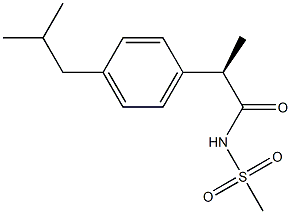
Description
Reparixin (CAS 266359-83-5) is a noncompetitive allosteric inhibitor of IL-8 (CXCL8) activation of CXCR1 and CXCR2 chemokine receptors (IC50?= 1 and 100 nM, respectively). It blocks a number of activities related to IL-8 signaling, including leukocyte recruitment (IC50?= 1 nM) without affecting receptor activation induced by other CXCR1 and CXCR2 agonists.1?In spontaneously hypertensive rats, 5 mg/kg reparixin administered daily for three weeks was shown to reduce blood pressure by inhibiting hypertension-related mediators.2?It attenuates inflammatory responses and promotes recovery of function after traumatic lesion to the spinal cord.3?Reparixin blockade (100 nM) of CXCR1 has also been used to deplete a cancer stem cell population in human breast cancer cell lines?in vitro.4
Uses
Prevention of delayed graft function in solid organ transplant (CXCL8 inhibitor).
Definition
ChEBI: Reparixin is a monoterpenoid.
in vivo
Reparixin is an inhibitor of CXCL8 receptor CXCR1 and CXCR2 activation, has been shown to attenuate inflammatory responses in various injury models. Spontaneously hypertensive rats (SHR) are administered a subcutaneous injection of Reparixin (5 mg/kg) daily for 3 weeks. Reparixin effectively decreases systolic blood pressure and increased the blood flow[3]. Reparixin reduces the levels of IL-1β in the brain after middle cerebral artery occlusion/reperfusion (MCAo) in mice. Bars represent levels of IL-1β (pg/100 mg) measured by ELISA in the brain tissues of mice subjected or not (SHAM) to MCAo and pretreated with vehicle or Reparixin (30 mg/kg, s.c.)[4].
IC 50
CXCR1wt: 5.6 nM (IC50, in L1.2 cells); CXCR1Ile43Val: 80 nM (IC50, in L1.2 cells); CXCR1: 1 nM (IC50, in cells); CXCR2: ~100 nM (IC50, in cells)
References
1) Bertini?et al.?(2004),?Non-competitive allosteric inhibitors of the inflammatory cytokine receptors CXCR1 and CXCR2: prevention of reperfusion injury; Proc. Natl. Acad. Sci. USA,?101?11791
2) Kim?et al. (2011),?Reparixin, an inhibitor of CXCR1 and CXCR2 receptor activation, attenuates blood pressure and hypertension-related mediators expression in spontaneously hypertensive rats; Biol. Pharm. Bull.,?34?120
3) Gorio?et al.?(2007),?Reparixin, an inhibitor of CXCR2 function, attenuates inflammatory responses and promotes recovery of function after traumatic lesion to the spinal cord; J. Pharmacol. Exp. Ther.,?322?973
4) Ginestier?et al.?(2010),?CXCR1 blockade selectively targets human breast cancer stem cells in vitro and in xenografts; J. Clin. Invest.,?120?485