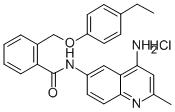
JTC-801 (≥0.01?mg/kg, i.v. or 1?mg/kg, p.o.) antagonizes the nociceptin-induced allodynia in mice. In mouse hot-plate test, JTC-801 prolongs escape response latency (ERL) to exposed heat stimulus with minimum effective doses (MED) of 0.01?mg/kg by i.v. or 1?mg/kg by p.o. In the rat formalin test, JTC-801 reduces both the first and second phases of the nociceptive response with MED of 0.01?mg/kg by i.v. administration or 1?mg/kg by p.o. administration. This anti-nociceptive action of JTC-801 is not inhibited by naloxone (10?mg/kg, s.c.). JTC-801 antagonizes the ORL1 receptor response, and has efficacious and potent anti-nociceptive effects in acute pain animal models not only by intravenous injection but also oral administration[1]. JTC-801 (0.3 mg/kg) decreases allodynia induced by the intrathecal injection of nociceptin in mice[2]. JTC-801 (6 mg/kg i.p., once daily) reverses SPS-induced mechanical allodynia, thermal hyperalgesia, anxiety-like behaviour and hypocortisolism. JTC-801 treatment also reverses NOP receptor protein and mRNA up-regulation in amygdala and PAG. JTC-801 blocks elevated N/OFQ levels in serum, CSF, PAG and hippocampus at day 21 of SPS[3]. JTC-801 (0.05-5 mg/kg, i.p.) supresses the the analgesic effect of N2O in 129Sv mice by the writhing test and tail flick test[4].