Uses
disintegrant, enteric coating, sustained release formulations
Biological Activity
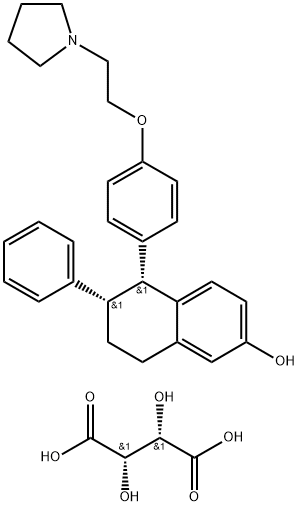
lasofoxifene (tartrate) is a third-generation, nonsteroidal selective estrogen receptor modulator (serm).estrogen receptors are activated by the hormone estrogen (17β-estradiol). serms are characterized by having estrogen agonist action in some tissues while acting as estrogen antagonists in others [1][2].lasofoxifene, also known as cp 336,156, is a third-generation, nonsteroidal selective estrogen receptor modulator. lasofoxifene bound with high affinity to the human estrogen receptor-α with ic50 value of 1.5 nm [1]. lasofoxifene is also a cb2 inverse agonist [4].in aged female rats, lasofoxifene decreased total serum cholesterol and fat body mass, and no uterine hypertrophy was observed. in 5-month-old ovariectomized (ovx) sprague-dawley female rats, lasofoxifene completely prevented ovx-induced increases in body weight gain, total serum cholesterol, and serum osteocalcin. cp-336,156 completely prevented ovx-induced bone loss and inhibited the increased bone turnover associated with estrogen deficiency in lumbar vertebrae, proximal tibiae, and distal femora [1].in postmenopausal women with osteoporosis, lasofoxifene reduced risks of nonvertebral and vertebral fractures, er-positive breast cancer, coronary heart disease, and stroke but an increased risk of venous thromboembolic events [2][3].
Biochem/physiol Actions
Lasofoxifene is a third-generation selective estrogen receptor modulator (SERM).
in vivo
Lasofoxifene tartrate (4 mg/mice; s.c.; 5 day/week; for 43 d) decreases arthritis severity, by reducing cartilage oligomeric matrix protein (COMP), the serum marker of cartilage destruction and reducing serum IL-6 (inflammatory cytokine) levels[1].
Lasofoxifene tartrate (4 mg/mice; s.c.; 5 day/week; for 43 d) protects against generalised bone loss in CIA by increasing trabecular bone mineral density (BMD), cortical thickness in mice[1].
Lasofoxifene tartrate (5, and 10 mg/kg; s.c.; 5 day/week; for 70 d) exerts function of inhibiting primary tumor growth and reducing metastases to the lung and the liver in mice[3].
| Animal Model: | Post-menopausal RA model on OVX (ovariectomised) DBA/1 mice (female DBA/1 mice, 8-10 weeks old, CIA-treated)[1] |
| Dosage: | 4 mg/mouse/day |
| Administration: | Subcutaneous injection; 5 days a week from the first signs of arthritis (day 18); 43 days |
| Result: | Reduced in arthritis severity, including synovial inflammation and destruction of joints reduction.
The mean arthritis frequency was 47% while the vehicle group was 81% at 42 days post immunization. |
| Animal Model: | NSG mices with xenograft tumors model (MIND, mammary intraductal): WT, Y537S and D538G ERα render tumors[3] |
| Dosage: | 1, 5, or 10 mg/kg |
| Administration: | Subcutaneous injection; 5 days per week; for 70 days |
| Result: | Elicited a superior inhibitory effect at a dose of 10 mg/kg, resulted potential tumor shrinkage in Y537S and D538G tumors.
And also reduced tumor weight to 60% for Y537S and 50% for D538G at 5 and 10 mg/kg, respectively. |
References
[1]. ke hz, paralkar vm, grasser wa, et al. effects of cp-336,156, a new, nonsteroidal estrogen agonist/antagonist, on bone, serum cholesterol, uterus and body composition in rat models. endocrinology. 1998 apr;139(4):2068-76.
[2]. cummings sr, ensrud k, delmas pd, et al. lasofoxifene in postmenopausal women with osteoporosis. n engl j med. 2010 feb 25;362(8):686-96.
[3]. gennari l, merlotti d, nuti r. selective estrogen receptor modulator (serm) for the treatment of osteoporosis in postmenopausal women: focus on lasofoxifene. clin interv aging. 2010 feb 2;5:19-29.
[4]. kumar p, song zh. cb2 cannabinoid receptor is a novel target for third-generation selective estrogen receptor modulators bazedoxifene and lasofoxifene. biochem biophys res commun. 2014 jan 3;443(1):144-9.