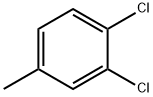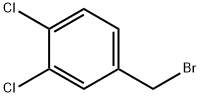
18880-04-1
| Name | 3,4-Dichlorobenzyl bromide |
| CAS | 18880-04-1 |
| EINECS(EC#) | 625-144-7 |
| Molecular Formula | C7H5BrCl2 |
| MDL Number | MFCD00041363 |
| Molecular Weight | 239.92 |
| MOL File | 18880-04-1.mol |
Chemical Properties
| Appearance | clear colorless to light yellow liquid |
| Melting point | 19 °C |
| Boiling point | 115-120 °C (1 mmHg) |
| density | 1.650 |
| refractive index | 1.605-1.607 |
| Fp | 110 °C |
| storage temp. | under inert gas (nitrogen or Argon) at 2-8°C |
| form | Liquid |
| color | Clear colorless to brown |
| Water Solubility | Insoluble in water. |
| Sensitive | Lachrymatory |
| BRN | 742579 |
| InChI | 1S/C7H5BrCl2/c8-4-5-1-2-6(9)7(10)3-5/h1-3H,4H2 |
| InChIKey | XLWSBDFQAJXCQX-UHFFFAOYSA-N |
| SMILES | Clc1ccc(CBr)cc1Cl |
| CAS DataBase Reference | 18880-04-1(CAS DataBase Reference) |
Safety Data
| Hazard Codes | C,T,N |
| Risk Statements | |
| Safety Statements | |
| RIDADR | 1760 |
| WGK Germany | 3 |
| Hazard Note | Toxic/Corrosive/Lachrymatory |
| HazardClass | 8 |
| PackingGroup | II |
| HS Code | 29039990 |
| Storage Class | 6.1A - Combustible acute toxic Cat. 1 and 2 very toxic hazardous materials |
| Hazard Classifications | Acute Tox. 3 Oral Aquatic Chronic 4 Eye Dam. 1 Skin Corr. 1B |