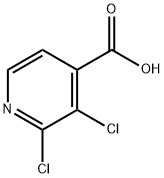
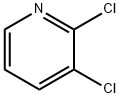
The general procedure for the synthesis of 2,3-dichloropyridine-4-carboxylic acid from 2,3-dichloropyridine and carbon dioxide was as follows: a hexane solution (31 mL, 50 mmol) of 1.6 M nBuLi was added slowly and dropwise to an anhydrous THF (100 mL) solution of diisopropylamine (7.0 mL, 50 mmol) at -25 °C under inert atmosphere. Subsequently, the reaction mixture was cooled to -78 °C and 2,3-dichloropyridine was added. The reaction mixture was kept stirred at -78 °C for 3 h. It was then poured into solid carbon dioxide and aged for 18 h at room temperature. After the reaction was completed, the mixture was diluted with water (100 mL), washed with ether (3 x 40 mL), then cooled to 0°C and acidified with concentrated HCl (about 5 mL). The acidified mixture was extracted with ether (3 x 50 mL), the organic extracts were combined, dried with anhydrous Na2SO4, filtered and concentrated to give 2,3-dichloropyridine-4-carboxylic acid as a white solid (7.7 g, 80% yield). The product was characterized by 1H NMR (d6-DMSO, 400 MHz): δ 8.49 (d, J = 5.0 Hz, 1H), 7.72 (d, J = 5.0 Hz, 1H).