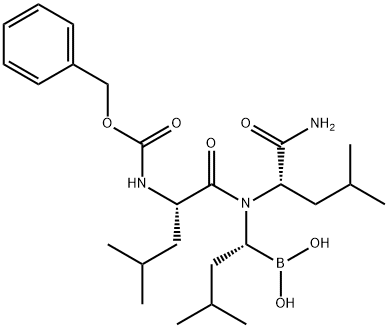
Biological Activity
mg-262 (also known as z-leu-leu-leu-b(oh)2), a boronic peptide acid, is a potent proteasome inhibitor that selectively and reversibly inhibits the chymotryptic activity of the proteasome. it consists of a peptide and boronic acid moiety which are functional to proteasome inhibition. according to previous studies, mg-262 is capable of reducing the viability of nasal mucosa and polyp fibroblasts, provoking cell growth arrest, inhibiting dna replication and retinoblastoma phosphorylation, increasing expression of the cell cycle inhibitor p21 and p27, and inducing cell death via loss of mitochondrial membrane potential, caspase-3 and poly(adp-ribose) polymerase activation, induction of c-jun phosphorylation and mitogen-activated protein kinase phosphatase-1 expression.laura pujols, laura fernandez-bertolin, mireya fuentes-prado, isam alobid, jordi roca-ferrer, neus agell, joaquim mullol, and cesar picado. proteasome inhibition reduces proliferation, collagen expression, and inflammatory cytokine production in nasal mucosa and polyp fibroblasts. the journal of pharmacology and experimental therapeutics 2012; 343:184-197hilary frase, jason hudak, and irene lee. identification of the proteasome inhibitor mg262 as a potent atp-dependent inhibitor of the salmonella enteric serovar typhimurium lon protease. biochemistry 2006; 45 (27): 8264-8274
References
[1] Mezquita J, et al. Down-regulation of Flt-1 gene expression by the proteasome inhibitor MG262. J Cell Biochem. 2003 Aug 15;89(6):1138-47. DOI:
10.1002/jcb.10587[2] Wu HM, et al. Proteasome inhibitors stimulate activator protein-1 pathway via reactive oxygen species production. FEBS Lett. 2002 Aug 28;526(1-3):101-5. DOI:
10.1016/s0014-5793(02)03151-4[3] Huang H, et al. Gambogic acid enhances proteasome inhibitor-induced anticancer activity. Cancer Lett. 2011 Feb 28;301(2):221-8. DOI:
10.1016/j.canlet.2010.12.015[4] Kumarapeli AR, et al A novel transgenic mouse model reveals deregulation of the ubiquitin-proteasome system in the heart by doxorubicin. FASEB J. 2005 Dec;19(14):2051-3. DOI:
10.1096/fj.05-3973fje[5] Lindsten K, et al. A transgenic mouse model of the ubiquitin/proteasome system. Nat Biotechnol. 2003 Aug;21(8):897-902. DOI:
10.1038/nbt851