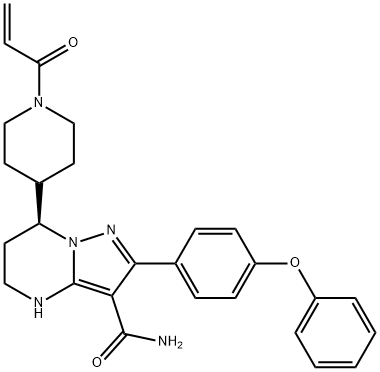
Description
Zanubrutinib, a second-generation BTK inhibitor discovered and developed by BeiGene in China, has been approved by the FDA (in 2019) for treating chronic lymphocytic leukemia (CLL) and certain other indications. Zanubrutinib has lower toxicity and better efficacy than ibrutinib. It is in direct competition with AstraZeneca’s acalabrutinib for the $12 billion blood cancer market currently dominated by the first-in-class BTK inhibitor ibrutinib.
History
Zanubrutinib (BGB-3111) is a highly selective second-generation irreversible BTK inhibitor discovered by BeiGene company, which was approved by U.S. FDA in 2019 with a Brukinsa trade name. In preclinical animal experiments, Zanubrutinib showed good oral bioavailability, higher plasma exposure and more complete target inhibition than Ibrutinib in tissues. Compared with Ibrutinib, Zanubrutinib showed more specific, long-lasting selectivity, fewer off-targets and fewer adverse reactions. It only occasionally causes atrial fibrillation or bleeding events. On January 14, 2019, Zanubrutinib capsules were approved by U.S. FDA for a breaking through treatment certification. In mid-November of the same year, Zanubrutinib capsules were approved for marketing in the United States for the treatment of adult mantle cell lymphoma patients who have received at least one of the previous therapies.
Uses
Zanubrutinib is classified as a Bruton''s tyrosine kinase inhibitor. Zanubrutinib is a medication for the treatment of adults with mantle cell lymphoma.
General Description
Class: non-receptor tyrosine kinase
Treatment: MCL, MZL, WM
Oral bioavailability = 15%
Elimination half-life = 3.3 h
Protein binding = 94%
Metabolism
Zanubrutinib showed a mean terminal elimination half-life of approximately 2–4 h (160 or 320 mg, QD) and an estimated oral bioavailability of 15%, relative to 3.9% (fasting state) for ibrutinib. Zanubrutinib is primarily eliminated hepatically via CYP3A4, but its metabolites have not been characterized.