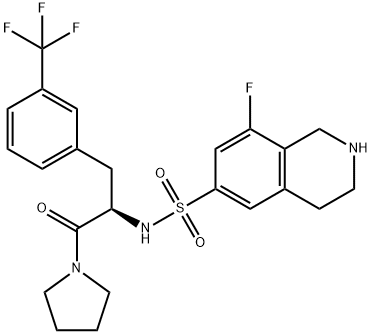
PFI-2 (i.p., 200 μM, twice a week) attenuates the progression of renal fibrosis and preserves renal function in FA nephropathy[2].
PFI-2 (i.p., 200 μM, twice a week) reduced ECM accumulation and fibroblasts activation after FA injury[2].
PFI-2 (i.p., 200 μM, twice a week) impeded Th2 cytokine signaling activation and M2 macrophage polarization[2].
PFI-2 (i.p., 200 μM, twice a week) suppressed M2 macrophages-myofibroblasts transition and myeloid myofibroblasts accumulation in the FA-treated kidneys[2].
PFI-2 (i.p., 200 μM, twice a week) attenuated macrophages M2 polarization and M2 macrophages-to-myofibroblasts transition in obstructed kidneys[2].
PFI-2 (i.p., 200 μM, twice a week) suppressed myeloid myofibroblast accumulation and renal fibrosis after UUO injury[2].
PFI-2 (i.p., 200 μM, twice a week) reduced the infiltration of inflammatory cells, the production of inflammatory molecules, and NF-κB activation in FA nephropathy.
| Animal Model: | Male C57BL/6 mice (8-10 week old, 20-25 g)[2] |
| Dosage: | 200 μM (PFI-2 is diluted in 100 μL 0.1% (v/v) DMSO to a concentration of 200 μM/100 μL) |
| Administration: | intraperitoneal injection, twice a week |
| Result: | Presented less bone marrow-derived myofibroblasts, fewer CD206+/α-smooth muscle actin + cells and developed less renal fibrosis (P<0.01).
Reduced the infiltration of inflammatory cells and decreased the production of pro-inflammatory cytokines and chemokines in the kidneys after folic acid treatment (P<0.01).
Suppressed the accumulation of NF-κB p65+ cells in folic acid nephropathy (P<0.01).
|