Synthesis
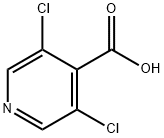
The general procedure for the synthesis of 3,5-dichloropyridine-4-carboxylic acid from carbon dioxide and 3,5-dichloropyridine was as follows:
1. a THF (25 ml) solution of 3,5-dichloropyridine (5.00 g, 33.8 mmol) was slowly added to an LDA solution [prepared from n-butyllithium (2.5 M hexane solution, 14.9 ml, 37.2 mmol) and diisopropylamine (4.10 g, 5.7 ml, 40.6 mmol) in THF (25 ml) at -78°C ]
2. Carbon dioxide gas was bubbled into the reaction system and the solution was observed to change from clear to brown color with gradual formation of precipitate. The reaction mixture was then slowly warmed up to room temperature.
3. After 2 hrs of reaction, the reaction was quenched with water (20 ml) and subsequently partitioned between diethyl ether (100 ml) and 1M NaOH (100 ml). The aqueous layer was separated and acidified to pH 1 with concentrated hydrochloric acid.
4. The acidified aqueous layer was extracted with dichloromethane solution containing 10% methanol. The organic layers were combined and dried with anhydrous magnesium sulfate followed by removal of the solvent under vacuum to give a brown solid.
5. The resulting brown solid was recrystallized from ethanol and dried under vacuum to give finally 3,5-dichloropyridine-4-carboxylic acid as pink crystals (2.63 g, 41% yield).
NMR hydrogen spectral data (DMSO-d6): δH 8.72 (2H, s).
References
[1] Bioorganic and Medicinal Chemistry Letters, 2003, vol. 13, # 3, p. 567 - 571
[2] Bioorganic and Medicinal Chemistry Letters, 2003, vol. 13, # 4, p. 709 - 712
[3] Bioorganic and Medicinal Chemistry Letters, 2008, vol. 18, # 1, p. 386 - 390
[4] Patent: US6348463, 2002, B1. Location in patent: Page column 18
[5] Patent: WO2004/6918, 2004, A1. Location in patent: Page/Page column 15